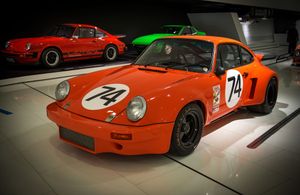
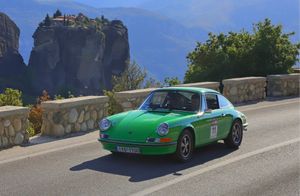
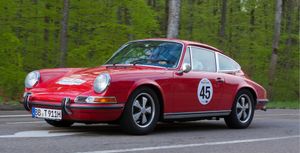
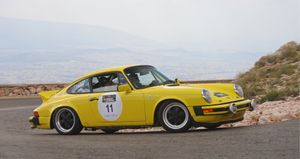
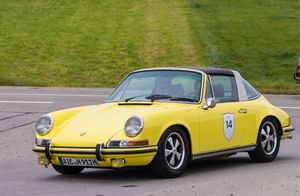
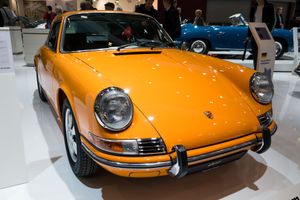
In 1974, Porsche created the Carrera RS 3.0 with mechanical fuel injection. Its price was almost twice that of the 2.7 RS, but it offered a fair amount of racing capability for the money. The chassis was largely similar to that of the 1973 Carrera RSR and the brake system was from the Porsche 917.
The 911E and 911S used mechanical fuel injection in all markets. The 911T was still using a carb, except in the US where it also used MFI, which accounts for the 9 hp power difference between the two.
The 1970 Porsche 911 was so good that the 1971 model year was basically unchanged. In 1971, the D-series replaced the C-series. The D-series featured galvanized under floor areas that were coated with PVC to make the car more resistant to corrosion.
In 1976 Porsche still made the 911 S Targa, the 911 S Coupe and the 911 E with few changes. However, Porsche headlined the mightiest 911 yet, the Turbo Carrera. They advertised it as “The Ultimate Porsche” and so it was.
In 1969 The wheelbase for all 911 and 912 models increased from 87.0 to 89.3 in, this helped the handing of the 911 when drivers would drive at the 911's limit creating more confidence between driver and car.
The C-series 911 was introduced. All engines went from a 2.1L motor to a 2.2L motor. On the chassis, the front-strut upper attachments points were moved 14mm forward, making steering easier for the driver.
The 3-speed auto Turbo Hydra-Matic became available as a transmission option. They heavy-duty floor-mounted 3-speed manual was now standard with the Muncie M-20 and the M-21 four-speed was optional, all with Hurst shifters.
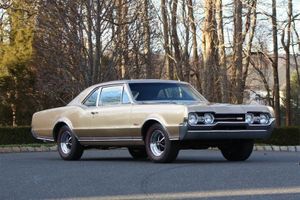
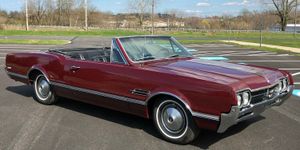
The 1966 442 got a restyle with all new exterior shell that included a pronounced hump over the rear windows and large C-pillars that extended beyond the rear windshield.
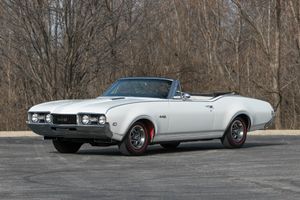
The 1968 442 finally became its own model from 1968 through 1971. Mechanically, they had two drivetrain combos. A red 455 ci were backed by modified W-30 Turbo 400 transmissions.