
The collector car market, in your inbox
Classic car news, hand-picked vehicles, and auction coverage. Choose what lands in your inbox.
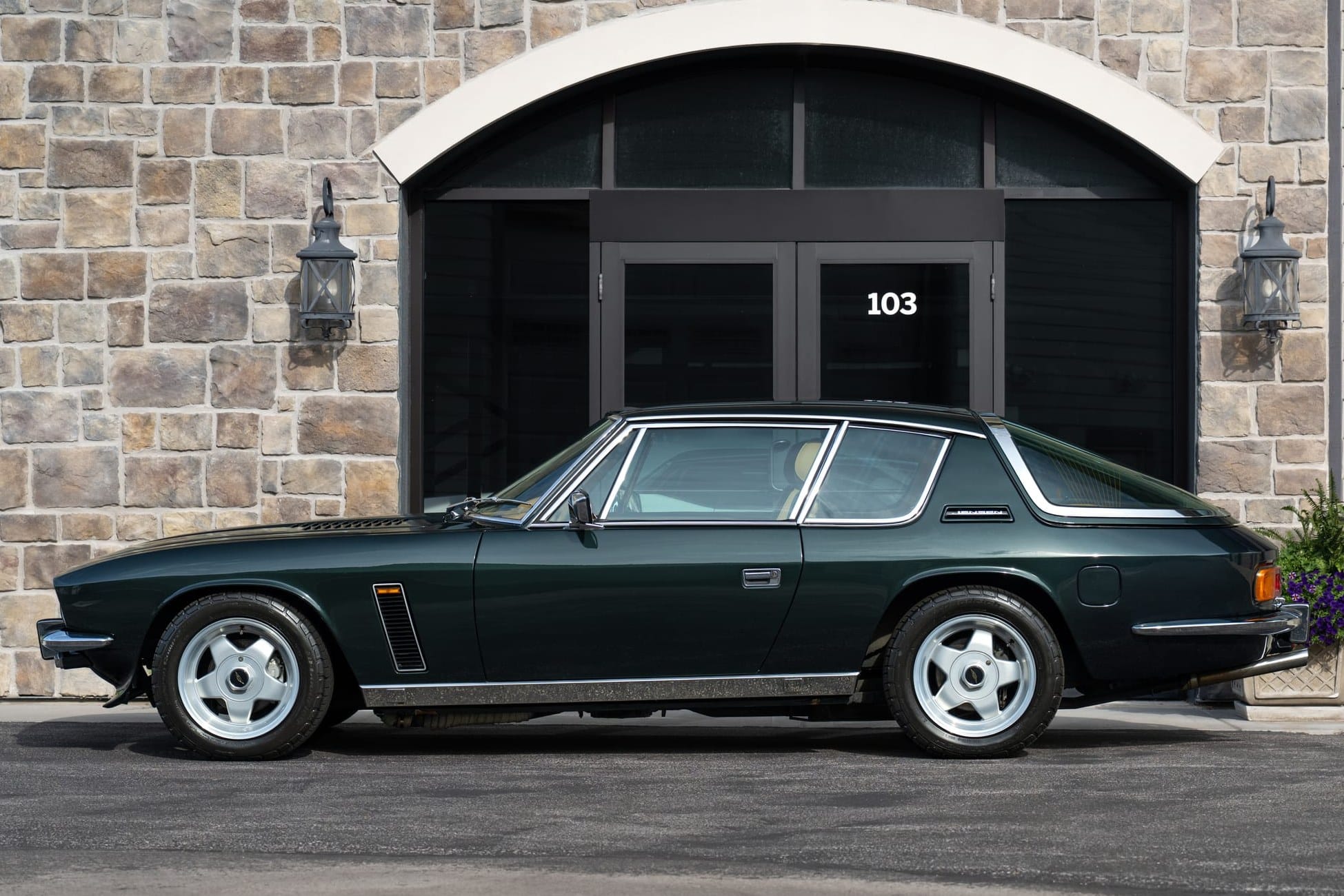
Quick: when did Jensen stop building the Interceptor? If you said 1976, you're in good company, and you're also a little wrong. A 1992 Jensen Interceptor S4 is live right now on Bring a Trailer, listed as one of a claimed 15 Series 4 cars and the last one built. At the time of writing the bid sits at $35,000, and the auction is scheduled to end Friday, October 23, at 5:30 p.m. ET.
The grand tourer that wouldn't stay dead
The Interceptor arrived in 1966 as an odd and wonderful recipe: an Italian-drawn body, a Chrysler big-block V8 and a wraparound glass hatch that made a two-door grand tourer usable on a Tuesday. Its sibling, the Jensen FF, brought all-wheel drive and anti-lock brakes to the road years before Audi made a fuss about either. Then the company went bankrupt in the mid-1970s, taking the big, thirsty, expensive GT car down with it.
That should have been the end. It wasn't. Jensen Parts and Service rose from the wreckage, and by 1978 manager Ian Orford owned it. In 1983 he unveiled what became the Series 4 Interceptor, with revised headlight surrounds and door handles and a new lower front spoiler. According to the listing, about 15 were built through 1992. Fifteen cars in roughly nine years is not a production run. It's a hobby with a payroll.
America knows the trick. The Avanti II kept a dead automaker's coupe alive for decades, and Britain's Bristol spent years stuffing Chrysler V8s into hand-built bodies of its own. The Jensen name has also kept getting dusted off, most recently with the Interceptor GTX revival.
What this one is
Chassis 170/2016 is described as the last car built in the series. It's a left-hand-drive "saloon" finished in green over tan leather, first delivered to a customer in Germany, later living in Denmark and reaching the US sometime after 2018. The selling dealer acquired it in 2025 and has it in Illinois with a Florida title.
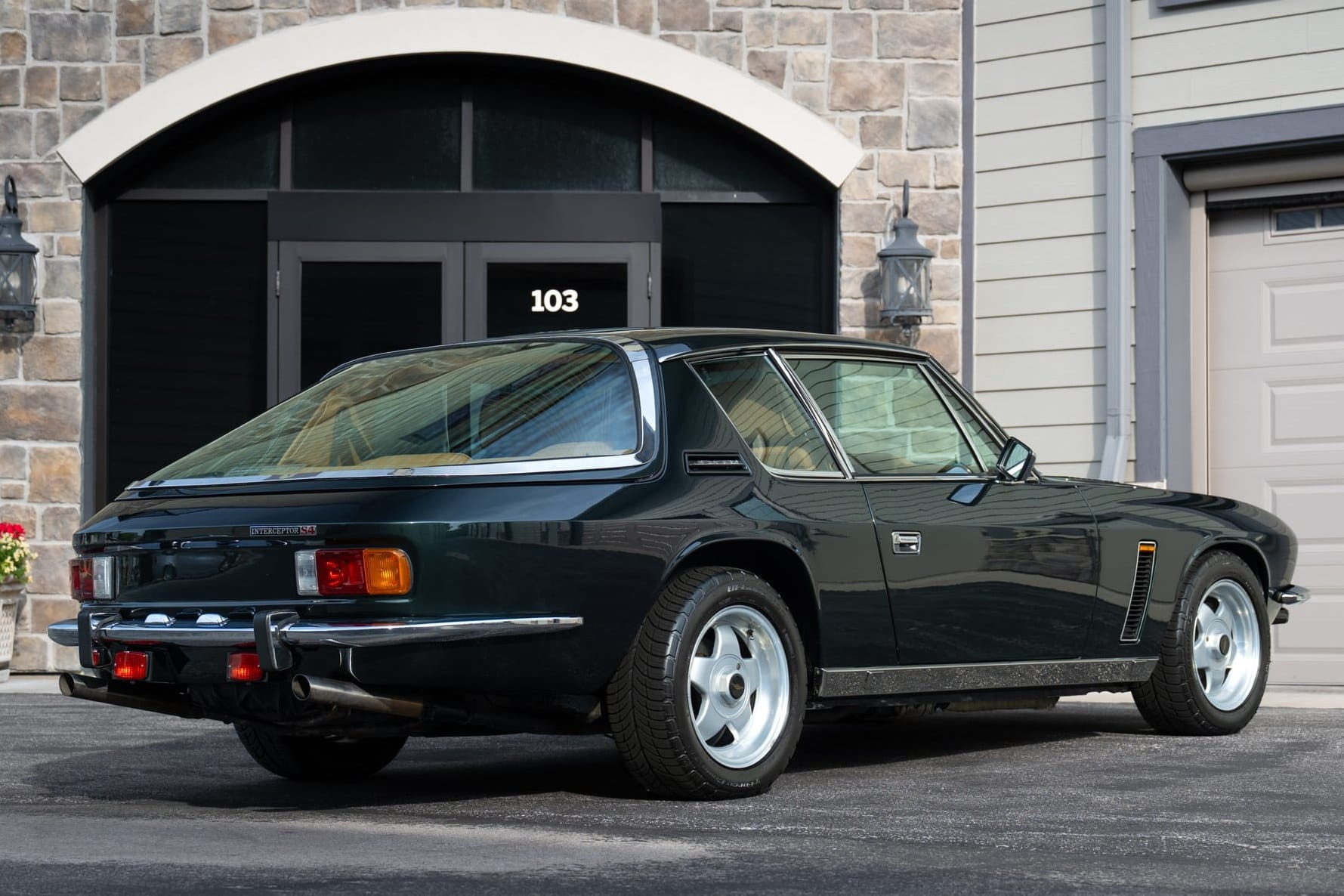
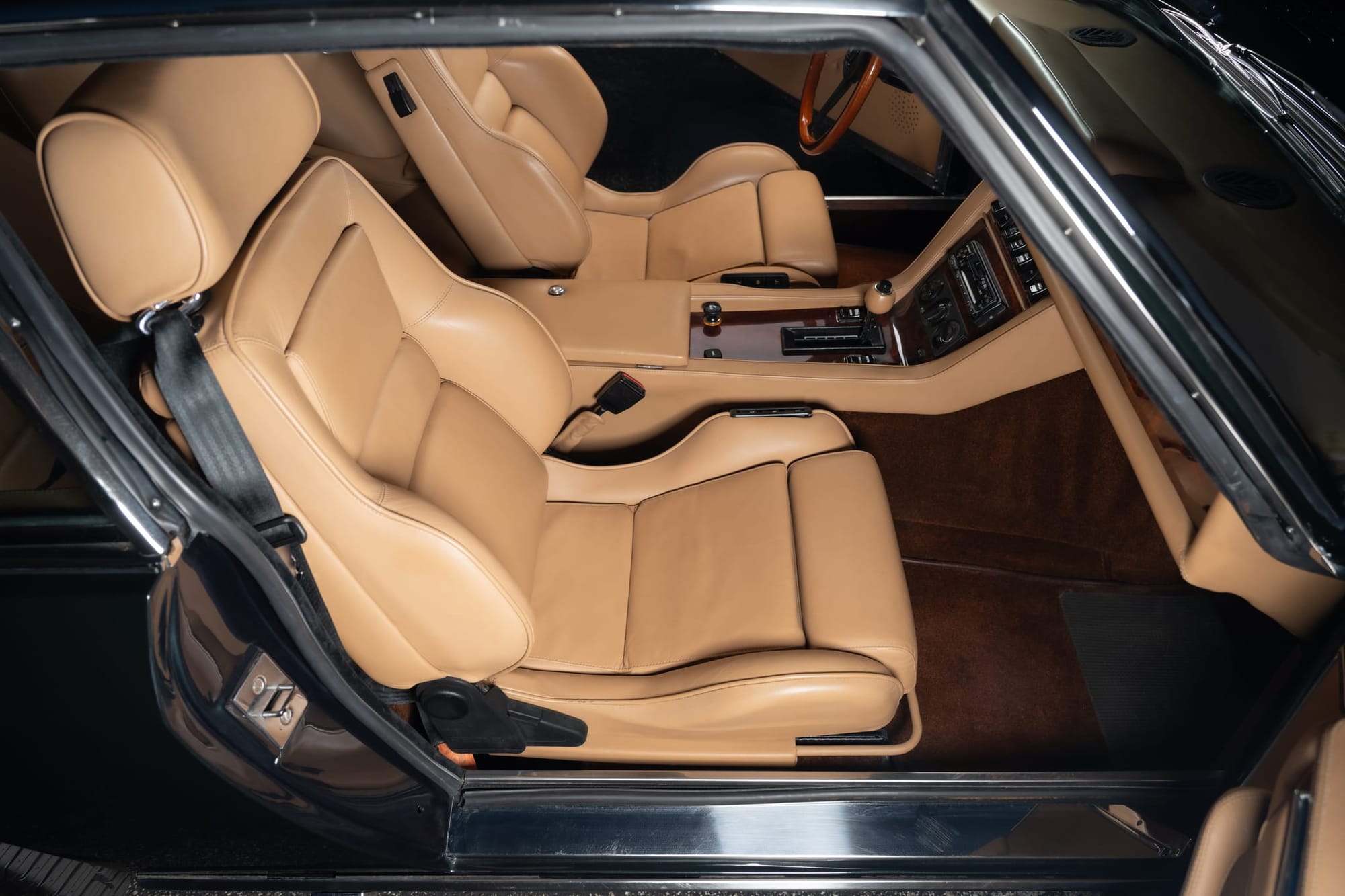
Power comes from a fuel-injected 360ci Chrysler V8 sending power through a three-speed automatic and a limited-slip differential to the rear wheels. The seller says the transmission is Chrysler's TorqueFlite A727. The S4 rides on 16-inch alloys, wears quad headlights and a louvered hood, and carries heated, power-adjustable Recaro front seats, a wood-rimmed Nardi wheel, air conditioning and a Pioneer cassette stereo. The odometer shows about 20k kilometers, roughly 13k miles, and the sale includes an assembly photo book, a locking Jensen briefcase, a tool kit and spare parts.
Why you forgot, and why you'll remember it now
The Interceptor belongs to that club of cars that were rare while they were new. Jensen was a small independent builder, the original company folded in the 1970s, and the revival that followed was a tiny operation compared with what the name once meant. The car's recipe, European styling over Detroit power, also showed up elsewhere. The Series 4 kept lines from the 1960s running into the age of the Miata, which is a ridiculous thing to be able to say.
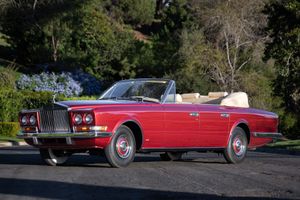
If you've only seen the earlier cars, like this rare 1976 convertible, the late date is what makes this one special. Most Interceptors are time capsules from the 1960s and '70s. This one was finished in 1992, the year of the Barcelona Olympics and a presidential election that sent Bill Clinton to the White House.
Read the fine print before you bid
The listing notes oxidation on the wheels and corrosion on various underside components, and the production count and "last built" status come from the listing rather than an independent registry, so treat them as claims until you've seen paperwork. It isn't offered as a no-reserve auction. As of Sunday, commenters were asking the seller about air conditioning and for a walkaround of the car's electrical functions, and the seller said a video was on the way. That's the kind of homework a car this obscure demands.
Want the full photo gallery, the cold-start video and the comment thread? Everything is on the original Bring a Trailer listing. Bidding runs through Friday, October 23, at 5:30 p.m. ET.