
The collector car market, in your inbox
Classic car news, hand-picked vehicles, and auction coverage. Choose what lands in your inbox.
Few questions divide classic car buyers faster than this one. To some enthusiasts, a modified classic is a car somebody ruined. To others, it is the smartest way to own an old car, one that starts on cold mornings, stops when asked, and can be driven on a long road trip without a tow-truck contingency plan. Both camps have a point, and the honest answer sits between them: whether a modified classic is a good purchase depends on what was changed, why it was changed, how well the work was done, and whether the paperwork proves it.
This guide breaks down how different types of modifications tend to be viewed by buyers and collectors, how to judge the quality of the work, and what to verify before you commit, whether you are buying or preparing to sell.
The Core Principle: Purpose, Quality, and Reversibility
Almost every sound judgment about a modified classic comes back to three questions. First, was the change made for a clear purpose, such as safety, reliability, or drivability, or was it purely a matter of one owner's taste? Second, was the work executed at a professional level, with clean fabrication and quality components? Third, could the car be returned to its original configuration if a future owner wanted that?
The more confidently you can answer yes to all three, the more likely the car will appeal beyond its current owner. Hagerty's valuation team has long made the case that light, easily reversible changes need not hurt a car's value, and that a modestly updated car that gets driven is often more appealing than an untouched one that never leaves the garage. The flip side is that highly personal, irreversible changes shrink the pool of buyers who will want the car.
Originality Still Matters, Especially on Rare Cars
Before weighing any modification, it helps to understand why originality carries so much weight in the first place. The idea of a “numbers-matching” car, one with its original chassis, body, engine, and drivetrain, did not matter much in the early decades of the automobile, when swapping major components was routine. According to Hagerty, it began to matter as manufacturers started offering multiple engines and transmissions in the same model in the mid-1950s, because a car's value came to depend heavily on its factory configuration. Chevrolet began stamping engine numbers around 1960, which made verification easier for its cars, while most other domestic manufacturers did not go to the same lengths.
The practical takeaway: on a rare, high-demand, or historically significant car, the original drivetrain and specification are a large part of what you are paying for. Changing them removes something that cannot be bought back. On a more common model, a sound modification matters far less to the market.
Restomods: When a Modern Build Makes Sense
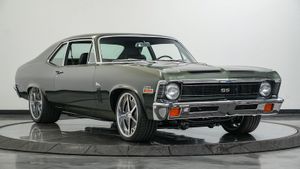
A restomod pairs a classic body with modern engineering: fuel injection, upgraded brakes, independent suspension, air conditioning, and contemporary comfort. Done well, it is a legitimate category with its own buyers, and we have covered the appeal in depth in The Art of the Restomod and Restomods Explained. If you are weighing a restomod against an original, our breakdown of restomod versus original walks through the trade-offs.
A few realities are worth keeping in mind as a buyer:
- You are buying the build, not the badge. A restomod is valued on the quality of the components, the fabrication, and the finish, not only on the model it started as. A top-tier professional build and a weekend project can look similar in photos and be worlds apart in value.
- Build cost rarely transfers dollar for dollar. Even excellent builds often sell for less than the total spent on them. Buying a finished car can be smarter than commissioning one, but be realistic about resale.
- Taste ages. Wheel designs, paint colors, and interior styling reflect the era they were chosen in. Restrained, period-appropriate choices tend to age better than trend-driven ones.
- Rarity argues against it. The rarer and more historically important the car, the weaker the case for a restomod treatment.
Engine Swaps: Execution Is Everything
An engine swap can be a brilliant fix or an expensive headache, and the difference lies almost entirely in execution. Popular swaps use well-supported, widely available engines, which means parts, tuning knowledge, and service are easy to find. Eyebrow-raising one-offs, like the Ford Model A with a Honda S2000 engine or the RB26-swapped Mustang Fastback, are great fun, but they appeal to a narrower audience than a conventional, well-supported combination.
When evaluating a swapped car, look beyond the engine itself. A proper swap addresses the whole system: transmission and driveshaft matched to the new power, cooling capacity, fuel delivery, exhaust routing, engine management, wiring, and, critically, brakes and suspension capable of handling the extra performance. An engine that makes far more power than the rest of the car was designed to handle is a red flag, not a selling point. Ask what happened to the original engine and transmission, too. If they were kept and come with the car, a future owner has the option of reversing the swap, which makes the car more broadly appealing.
Suspension, Brakes, and Drivability Upgrades
This is the category where modifications are most often justified. Radial tires, upgraded shocks, front disc brakes, electronic ignition, improved cooling, and better lighting make an old car safer and more pleasant to use. Hagerty's guidance on modifying without ruining value consistently favors changes that are non-invasive and can bolt on and off without cutting or drilling original components.
The key distinction is between upgrades that are reversible and those that are not. Swapping a dated ignition for an electronic unit and keeping the original parts is easy to undo. Cutting into a frame or floor to fit a different suspension is not. Some changes, such as a disc brake conversion or power steering, may require altering original components, and many buyers will accept that trade-off when it makes the car safer to drive. Just make sure the work was done with quality parts and that you can see exactly what was changed.
Aftermarket Wheels and Cosmetic Changes
Wheels are the most visible modification and among the easiest to evaluate. Period-correct designs and sensible sizes that suit the car's proportions tend to be well received. Oversized wheels with stretched tires, extreme fitment, or cut fenders to make them fit are much harder to sell. If the original wheels come with the car, a wheel swap is a non-event, because the next owner can put them back on in an afternoon.
The same logic applies to the rest of the appearance: custom paint colors, aftermarket seats, modern audio, and dashboard changes. Paint and upholstery are costly to reverse, while a modern stereo hidden in a way that leaves the original radio in the glovebox is a courtesy to the next owner. A useful rule is to favor changes that a future owner could remove without leaving scars.
Modified Back in the Day Is Not the Same as Modified Last Year
Some cars were modified long ago, in period, by owners using the parts and techniques of the time. These so-called “day two” modifications can carry real historical interest when they are documented and period-correct. A recent modification made to resemble a period one does not carry the same weight. If the seller claims a modification is historic, ask for evidence: old photographs, magazine features, race records, or ownership history that backs up the story.
How to Judge Workmanship
Quality is the great separator between a smart purchase and a costly mistake. Whether you are looking at a restomod or a lightly updated driver, check these areas closely:
- Fabrication and welds. Look for clean, consistent welds and tidy brackets. Messy, grinder-hidden, or heavily filled work may be concealing problems.
- Wiring. A hack job with spliced wires, loose connectors, and tape is both a reliability issue and a fire risk. Professional work uses labeled harnesses, proper fuse protection, and secured routing.
- Fluids, hoses, and fuel system. Check for leaks, correct hose routing, and fuel components rated for modern fuel.
- Panel fit and paint. Uneven gaps, overspray, or ripples can indicate previous accident damage or rushed bodywork.
- Components. Recognized brands with parts support are preferable to obscure parts that may be hard to service.
- Test drive. Pay attention to how the car steers, stops, and tracks straight, and how the cooling and charging systems behave.
For any significant purchase, pay for a pre-purchase inspection by a specialist who knows the type of car and the type of modification. It is far cheaper than discovering structural or electrical problems after the sale. Our guides on signs a classic car might not be a good deal and things to do when buying a classic car are good starting points for building a checklist.
Documentation Is Part of the Car
With a modified classic, the paperwork is almost as important as the metal. Documentation turns “trust me” into evidence, and it supports the car's value in several ways.
Look for receipts for parts and labor, build photos showing the car before and during the work, invoices from the shop that performed it, a list of components used, dyno sheets or alignment records where relevant, and any appraisals. Photos of the car in bare-metal or disassembled stages can be especially persuasive, since they show what is under the paint. If original parts were retained, a clear inventory of what exists and where it is stored adds to the car's appeal.
Documentation also matters for insurance. Insurers such as Allstate advise keeping receipts for upgrades and parts, before-and-after photos, appraisal documents, and mechanics' work orders, and they recommend reporting major modifications proactively rather than waiting until after a claim. Failing to disclose modifications can put coverage at risk. If you are buying, ask your insurer how it treats the car's modifications before you close the deal, and confirm how the coverage works for a vehicle that does not match a standard stock valuation. For help reading what a seller has provided, see our guide to reading a classic car auction listing like a pro.
Questions to Ask Before You Buy
- Why was the car modified, and by whom?
- Is there a complete record of parts, labor, and dates?
- Were any original parts kept, and do they come with the car?
- Were the modifications reversible, and what would reversing them involve?
- Has the car been driven and sorted since the work was completed, or is it untested?
- Does the insurer understand the modifications, and how will the car be covered?
- Is the car rare enough that originality should be the priority?
Advice for Sellers
If you are preparing to sell a modified classic, preparation is your best tool. Assemble a binder or digital folder with every receipt, photo, and invoice. Keep and label the original parts. Be open about what was changed and why, and describe the work accurately. Buyers who can see the whole story are more willing to pay for the car as it is, and are less likely to assume the worst about anything you leave out. If you are considering changes before selling, think carefully: reversible, well-documented improvements tend to help, while an irreversible overhaul done to chase a trend may not pay for itself.
The Bottom Line
Buying a modified classic can be an excellent decision, particularly when your goal is to drive and enjoy the car rather than preserve it as a museum piece. The strongest candidates are well-built, thoughtfully modified, reversible where possible, and backed by thorough documentation. The riskiest are cars with unexplained changes, questionable workmanship, and no paper trail. Match the car to your purpose, inspect it with a specialist, insist on documentation, and be especially cautious about modifying or buying a heavily altered example of a truly rare model. Handled that way, a modified classic can be as rewarding as an original, and often easier to live with.