
German car giant BMW first made its name as a producer of aircraft engines and motorcycles, ironically its first car was the Dixi, a license built Austin Seven! In 1933 the company produced its first new design, the 303.
The Ultimate Driving Machine
The acronym BMW stands for Bayerische Motoren Werke which roughly translates to the Bavarian Engine Works Company. The German car giant BMW first made its name as a producer of aircraft engines and motorcycles, ironically its first car was the Dixi, a license built Austin Seven! In 1933 the company produced its first new design, the 303, which was quickly followed by a number of successful pre-war models such as the 328.
Emerging from the ashes of war-torn Germany the company started to produce an odd mixture of Bubble Cars and luxury saloons before nearly going bankrupt in 1959. From 1960 the company began to recover and survives today as one of the last independent European car producers.
Production Models
| Model | Years Produced | Number Produced | Comments |
|---|---|---|---|
| Dixi | 1929 - 1931 | 15,948 | License built Austin Seven |
| AM1 - AM4 | 1933 - 1943 | Body originally produced by Mercedes-Benz | |
| 3/20 AM4 | 1933 - 1934 | 4,809 | |
| 3/20 Cabriolet | 1933 - 1934 | 2,406 | Peak Power 20 bhp |
| 309 | 1934 - 1936 | 6,000 | 4 Cylinder 845cc Engine |
| 315 | 1934 - 1937 | 9,765 | Drophead Coupe, Tourer, Limousine, Cabriolet and Saloon |
| 315/1 319/1 | 1934 - 1937 | 342 | S6 OHV 1911cc Engine, Top speed of 75 mph |
| 319 | 1935 - 1937 | 6,646 | Drophead Coupe, Tourer, Limousine, Cabriolet and Saloon |
| 326 | 1936 - 1941 | 15,949 | Cabriolet (2 door 2 seats) (4 door 4 seats) and Saloon |
| 328 | 1936 - 1939 | 450 | |
| 329 | 1936 - 1939 | 1,170 | |
| 322 Cabriolet | 1937 - 1938 | 6 Cylinder 1971cc Engine | |
| 320/321 | 1937 - 1941 | 7,882 | Saloon (2 door 4 seats) |
| 327/80 327/55 | 1938 - 1941 | 1396/80 569/55 |
Coupe and Cabriolet |
| 335 | 1939 - 1941 | 410 | 3485cc S6 Engine, Cabriolet and Saloon |
| Eisenach 321 | 1945 - 1950 | 6,142 | 1971cc 6 Cylinder Engine |
| 327-2 | 1948 - 1955 | 505 | 1971cc 6 Cylinder Engine |
| 501 | 1951 - 1958 | 8,955 | Cabriolet, Coupe and Saloon |
| 502 Cabriolet | 1954 - 1961 | 50 | 2580cc V8 Engine |
| 501 A | 1954 - 1955 | 5,002 - Saloon 220 - Cabriolet |
|
| 501 V8/502 | 1954 - 1963 | 12,896 | 3168cc V8 Engine, Top Speed 101 mph |
| 501/6 | 1955 - 1958 | 4,645 | 2077cc 6 Engine |
| 502 3.2 | 1955 - 1961 | 3,935 | 3146cc V8 Engine |
| 503 | 1955 - 1960 | 412 | 3168cc V8 Engine, Top Speed 125 mph |
| 507 (Roadster) | 1955 - 1960 | 253 | 3168cc V8 Engine, Top Speed 118 mph |
| Isetta | 1955 - 1963 | 161,728 | 247cc and 297cc Engine, Top Speed 54 mph |
| 600 | 1957 - 1959 | 34,813 | 582cc Engine, Top Speed 63 mph |
1929 -1931
BMW Dixi - 15,948 were produced with a bhp of 15 at 3,000 Revs.
1933 - 1943
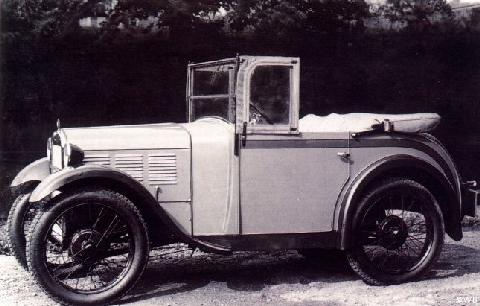
After cancelling the contract with Austin in the 1930’s BMW was forced in developing their own 4 cylinder motor. So began the production of the AM1, AM2, AM3 and AM4.
The AM1 body was first produced by Mercedes Benz in Sindelfingen, Germany.
The price of the AM4 built between 1933 and 1943 started, according to the ordered configuration, with 2.650 Reichsmarks.
The 4 cylinder motor with 872 cm² and 20 hp managed a speed of 80 km/h using about 7.5 l/100 Km.
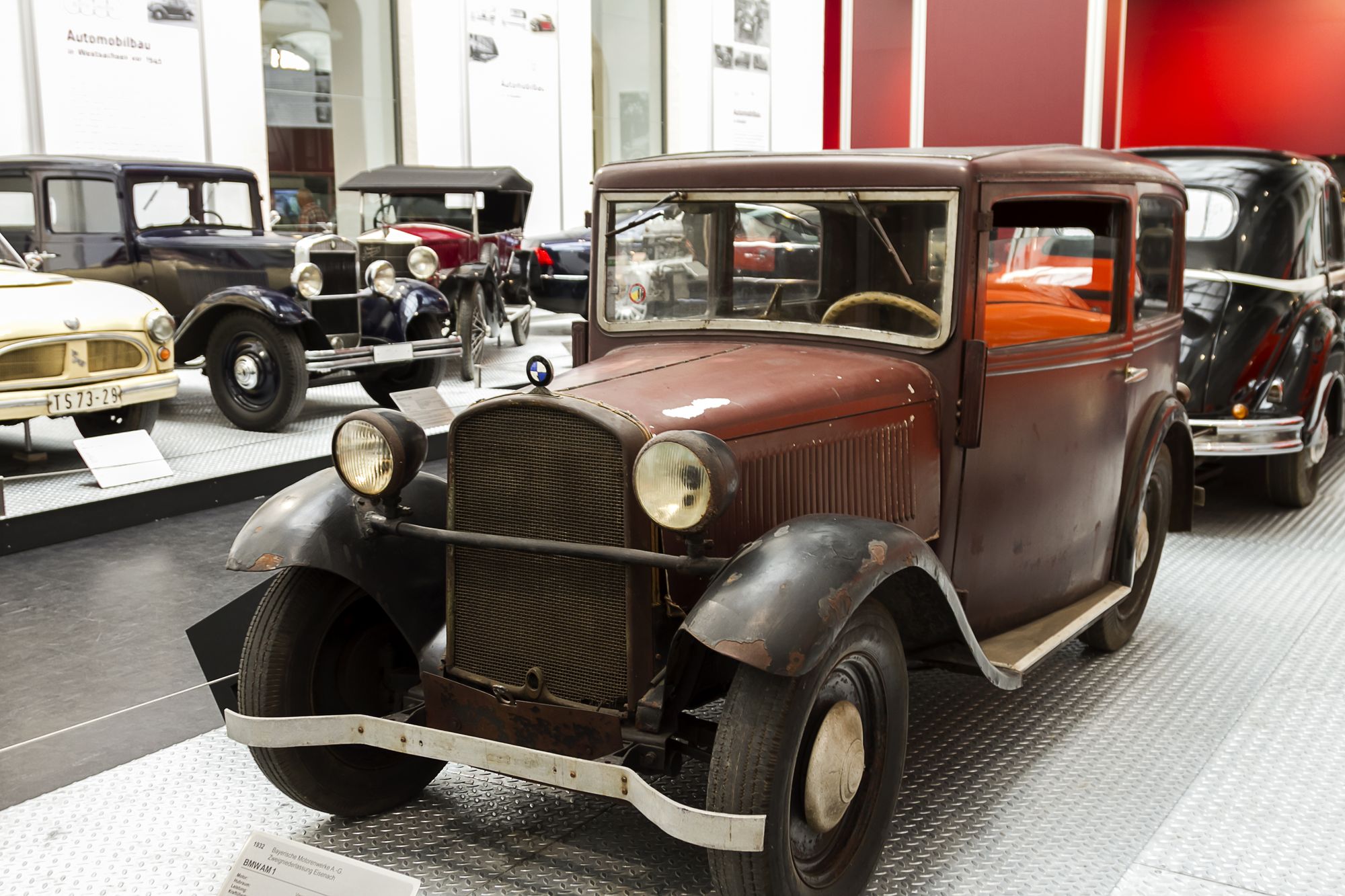
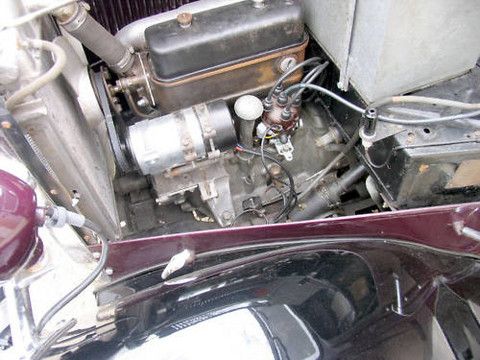
BMW AM1 (AM4 Motor)
1945 - 1950
BMW Eisenach 321 - Only 6,142 were produced in a 5 year time span. The 6-cylinder, 1971cc engine produced 45 bhp at 3700 revs.
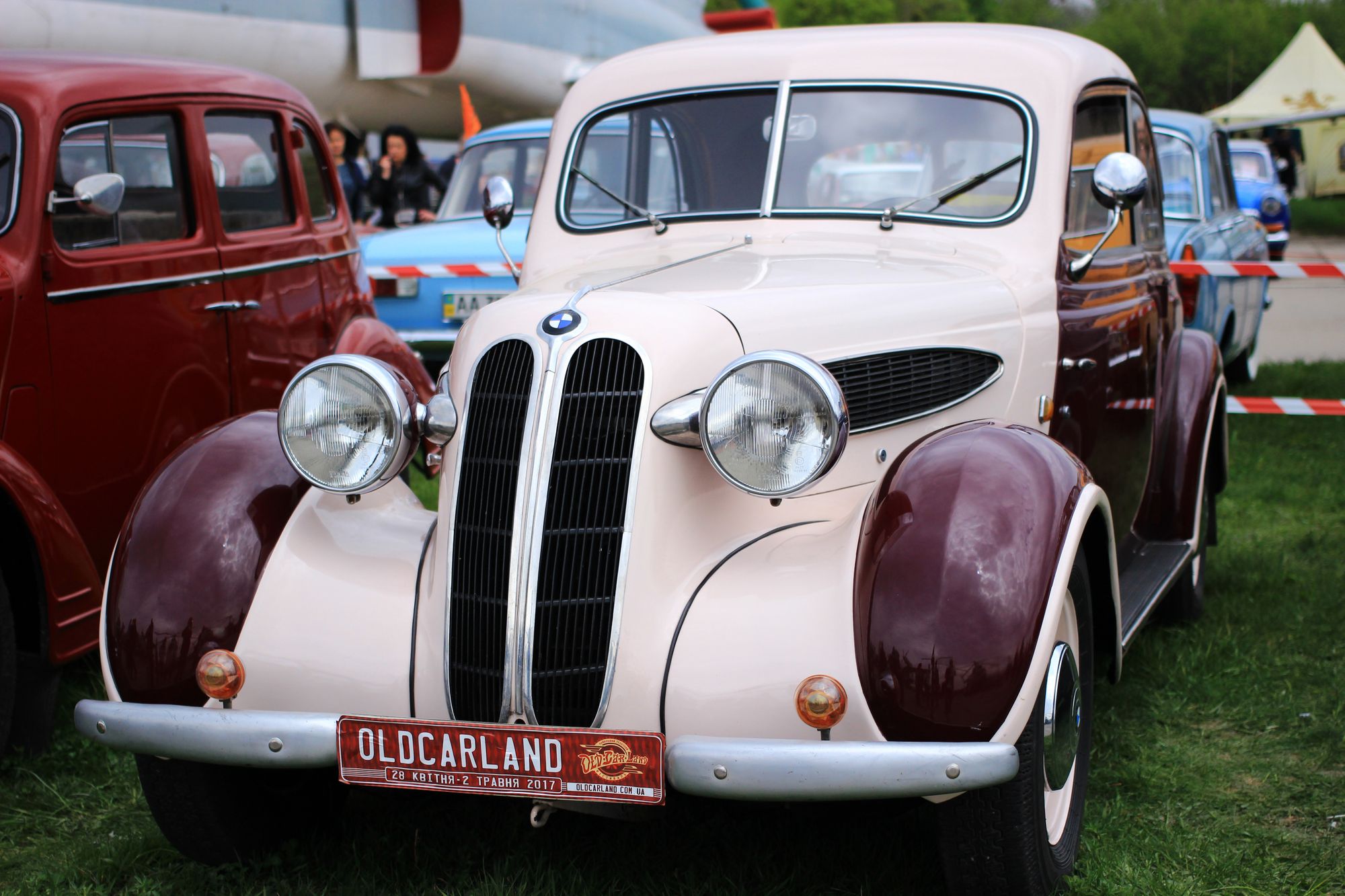
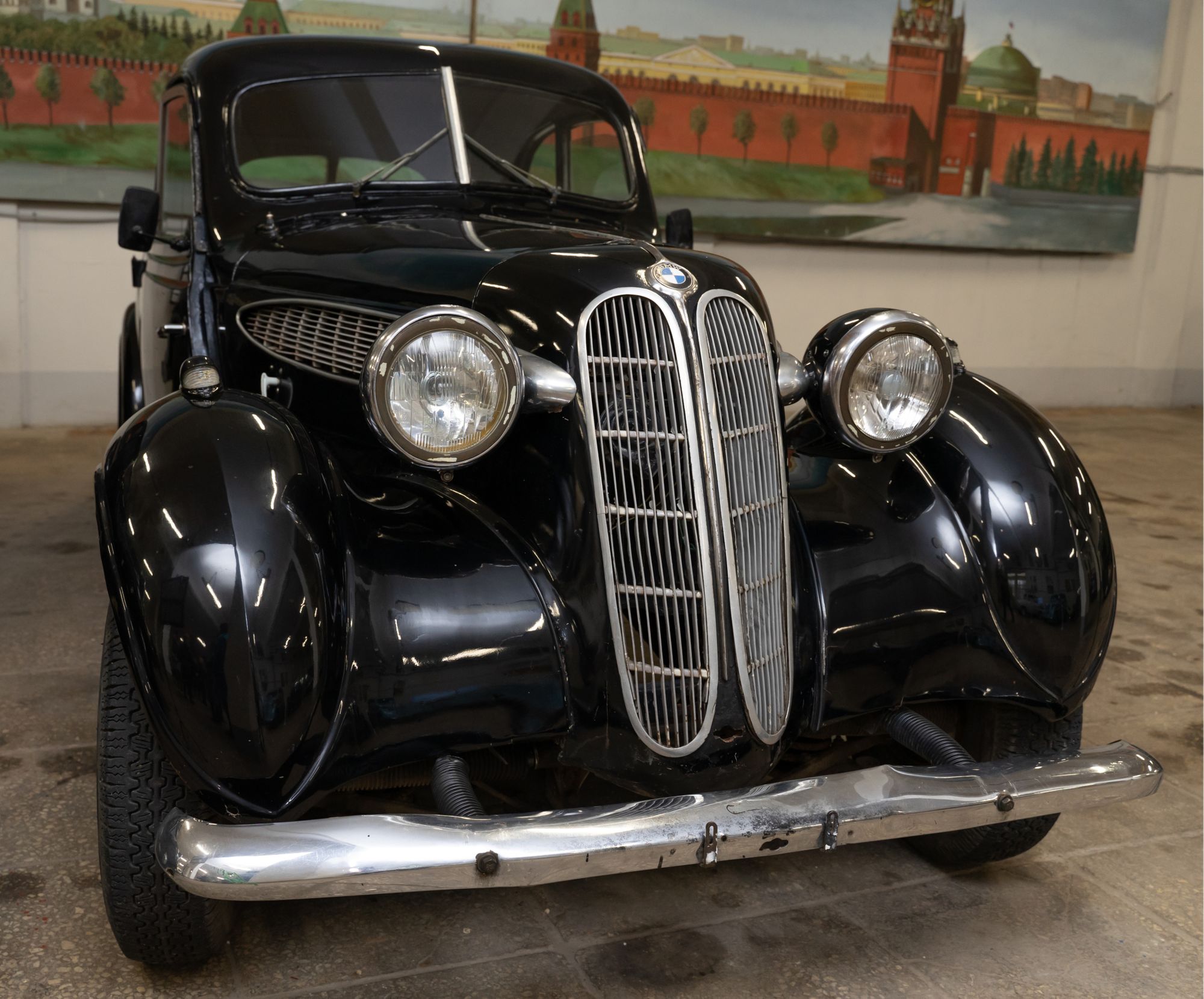
BMW Eisenach 321
1951 - 1958: Postwar Luxury Saloons
BMW resumed car production in Bavaria in 1952 with the 501, a large luxury saloon nicknamed the "Baroque Angel" for its flowing, rounded styling. Built between 1951 and 1958, around 8,955 were produced, powered initially by a 2.0-litre six-cylinder engine. In 1954 BMW fitted the 502 with Germany's first post-war aluminium V8, a 2,580cc unit, making it a genuine rival to Mercedes-Benz. These hand-built saloons were beautifully engineered but expensive, and their slow sales contributed to the financial crisis that would nearly sink the company by the end of the decade.

1955 - 1962: Bubble Cars and Microcars
Facing financial pressure, BMW licensed the egg-shaped Isetta from Italy's Iso SpA and fitted it with motorcycle-derived engines. Launched in 1955, the single-door bubble car was entered through a front-hinged door and powered by a 247cc or 297cc engine, reaching around 53 mph. It became a sensation during Europe's fuel-conscious post-war years, with 161,728 built through 1962. BMW followed it with the larger four-seat 600 (1957-1959), which stretched the Isetta concept and introduced a semi-trailing-arm rear suspension that would influence later BMW models.

1959 - 1965: The BMW 700 and the Brink of Bankruptcy
By 1959 BMW was nearly taken over by rival Daimler-Benz. The turning point came partly from a large investment by the Quandt family and partly from the success of the rear-engined BMW 700. Launched in 1959 and styled by Giovanni Michelotti, it used an air-cooled 697cc flat-twin engine derived from BMW's motorcycles. Light, nimble and surprisingly successful in motorsport, the 700 sold roughly 188,000 units and gave BMW the breathing room and cash flow it needed to develop the all-important New Class.

1962 - 1972: The New Class (Neue Klasse)
The 1962 BMW 1500 launched the New Class of compact sport sedans and is widely regarded as the range that established BMW's modern identity. With a new overhead-cam four-cylinder engine, fully independent suspension and crisp Michelotti-influenced styling, the New Class blended practicality with genuine driving enjoyment. The line grew to include the 1600, 1800 and 2000 models, and in 1966 spawned the celebrated 02 Series two-door coupes, including the legendary 2002. The 2002 turbo of 1973 became Europe's first turbocharged production car. This era cemented BMW's reputation as a leading maker of sport-oriented cars.

1972 - Present: The 5 Series (Mid-Size Sedan)
Introduced in 1972, the 5 Series was the first BMW to use the modern naming convention and has been the brand's mid-size executive sedan ever since. The generations are: E12 (1972-1981), the original; E28 (1981-1988), which introduced the first M5 in 1984; E34 (1988-1996), praised for build quality and the first 5 Series Touring; E39 (1995-2003), widely considered one of the finest-handling sedans ever and the first with a V8 M5; E60/E61 (2003-2010), with controversial Bangle styling and a V10 M5; F10/F11 (2010-2017); G30/G31 (2017-2023); and the all-electric-capable G60 (2023-present), which is offered as the battery-powered i5. Across these eight generations the 5 Series has balanced comfort, technology and driver engagement.

1975 - Present: The 3 Series (Compact Sport Sedan)
The 3 Series replaced the 02 Series in 1975 and has become BMW's best-selling model and the benchmark for the compact sports sedan class. Its generations are: E21 (1975-1983); E30 (1982-1994), which introduced the first M3 in 1986 plus convertible and Touring bodies; E36 (1990-2000), the first with a six-cylinder M3 and a wide range of body styles; E46 (1998-2006), often cited as a high point for handling balance; E90/E91/E92/E93 (2005-2013), the first with a turbocharged petrol six and a V8 M3; F30 (2011-2019), when the coupe and convertible split off to become the 4 Series; and the current G20 (2019-present), offered with mild-hybrid and plug-in-hybrid power. Seven generations on, the 3 Series remains the heart of the BMW range.

1978 - Present: The 7 Series (Flagship Luxury Sedan)
The 7 Series is BMW's full-size flagship and the showcase for the company's most advanced technology. Its generations are: E23 (1977-1987); E32 (1986-1994), which introduced BMW's first post-war V12 in the 750i in 1987; E38 (1994-2001), a styling icon that offered the first diesel 7 Series and a starring film role; E65/E66 (2001-2008), which debuted the controversial iDrive controller; F01/F02 (2008-2015); G11/G12 (2015-2022); and the current G70 (2022-present), the first 7 Series available as the fully electric i7. The flagship has consistently introduced features that later filtered down across the BMW range.

1978 - Present: BMW M and the M1 Supercar
BMW M GmbH, known as BMW Motorsport GmbH until 1993, was founded to support racing and went on to build high-performance road cars. Its first road car was the 1978 M1, a mid-engined supercar with a 277 hp straight-six, developed with input from Lamborghini and styled by Giugiaro. The M5 followed in 1984 and the M3 in 1986, both becoming benchmarks in their classes. Today the M lineup spans the M2, M3, M4, M5 and high-performance versions of the X5, X6 and the XM, BMW's first bespoke M model since the M1. The M badge is also widely used for M Sport trim and M Performance models across the range.

1989 - Present: The Z Roadsters
BMW returned to the two-seat roadster with the limited-production Z1 (1989-1991), famous for its vertically retracting doors. The Z3 (1995-2002) was BMW's first mass-produced roadster, built in the United States and featured in a James Bond film. The exotic Z8 (1999-2003) revived the spirit of the 1950s 507 with a hand-built aluminium body and a V8 from the M5. The Z4 then took over in three generations: the E85/E86 (2002-2008), the folding-hardtop E89 (2009-2016), and the current G29 (2018-present), which was co-developed with Toyota and shares its platform with the Toyota Supra.

1999 - Present: The X Series (SUVs and Crossovers)
BMW entered the SUV market in 1999 with the X5 (E53), which BMW called a Sports Activity Vehicle to emphasise its on-road handling. It was followed by the smaller X3 in 2003 and the coupe-styled X6 in 2008, a body style BMW effectively invented. The range has since expanded to span the entire alphabet of sizes: the compact X1 and X2, the mid-size X3 and X4, the large X5 and X6, and the three-row X7 flagship introduced in 2018. Most X models are now into their second, third or fourth generation, and the line has grown into one of BMW's most important sources of sales and profit, built largely at the Spartanburg plant in the United States.

2013 - Present: The BMW i Electric Era
BMW's modern electric story began with the i sub-brand in 2013. The i3 city car used a carbon-fibre-reinforced passenger cell and was BMW's first mass-production electric car, while the striking i8 plug-in-hybrid sports car paired a three-cylinder engine with electric drive. BMW had experimented with electric power far earlier, building two battery-powered 1602 Elektro saloons for the 1972 Munich Olympics. The current i range applies electric power to mainstream models: the i4 liftback, the i5 (an electric 5 Series), the i7 (an electric 7 Series) and a family of electric SAVs including the iX1, iX2, iX3 and the technology-flagship iX. This marks BMW's transition from combustion icon to electric-era manufacturer while retaining its focus on driving dynamics.

The Wider BMW Group: Mini, Rolls-Royce and the Roundel
Beyond its own badge, BMW AG owns two further car marques. It acquired the Rover Group in 1994; although that takeover proved costly and was largely unwound by 2000, BMW kept the Mini brand and relaunched it in 2001 as a hugely successful premium small car. In 1998 BMW secured the rights to Rolls-Royce, and since 2003 has built Rolls-Royce motor cars at Goodwood in England. The famous blue-and-white roundel, often mistaken for a spinning propeller, actually evolved from the logo of predecessor Rapp Motorenwerke and echoes the colours of the Bavarian flag. Today the BMW Group produces well over two million vehicles a year and remains one of the last independent European car makers, with the Quandt family as its long-term anchor shareholder.