
The collector car market, in your inbox
Classic car news, hand-picked vehicles, and auction coverage. Choose what lands in your inbox.
Few names carry as much weight in the collector world as Steve McQueen, and a motorcycle that spent its final decades in the actor's own collection has now resurfaced for sale. This 1931 Harley-Davidson VL belonged to McQueen until his death in 1980, and it is being offered out of Neptune, New Jersey, by the dealer who acquired it in May of 2026.
The bike has been through a cosmetic refurbishment but is not currently running, so a buyer should plan on recommissioning it before any thought of riding. Even so, machines with a genuine McQueen connection rarely sit on the market for long, and it will be fascinating to see where the bidding lands when this no-reserve sale closes.
A Troubled Big Twin That Found Its Footing
Harley-Davidson came late to the side-valve V-twin, with Indian already enjoying real success behind its Chief and Scout. Milwaukee responded in 1929 with the 45 cubic inch D-series, then targeted the heart of the market with a new 74 cubic inch flathead Big Twin known as the V series, announced as a 1930 model only weeks before the stock market crash.
On paper the engine looked like a leap forward, promising more power, removable Ricardo-style cylinder heads, interchangeable wheels and a sturdier frame. Reality was harsher. Early machines suffered undersized flywheels, weak valve springs, an overmatched clutch and frames prone to cracking under the V's extra weight. After roughly 1,300 examples, Harley halted the line for several months to redesign the bottom end, and controversially asked dealers to swallow the labor cost of rebuilding bikes already in customers' hands.
By the time the 1931 model year arrived, the corrected geometry was built in at the factory rather than retrofitted in a dealer's shop. The 1931 cars also gained a list of detail revisions: a single seven-inch headlamp replaced the old twin bullet lights, a cleaner single-pipe exhaust took over from the fussy four-pipe muffler, and 1931 marked the first appearance of chrome plating on a Harley-Davidson, initially on small parts only.
Flathead Power And A 1931 Spec Sheet
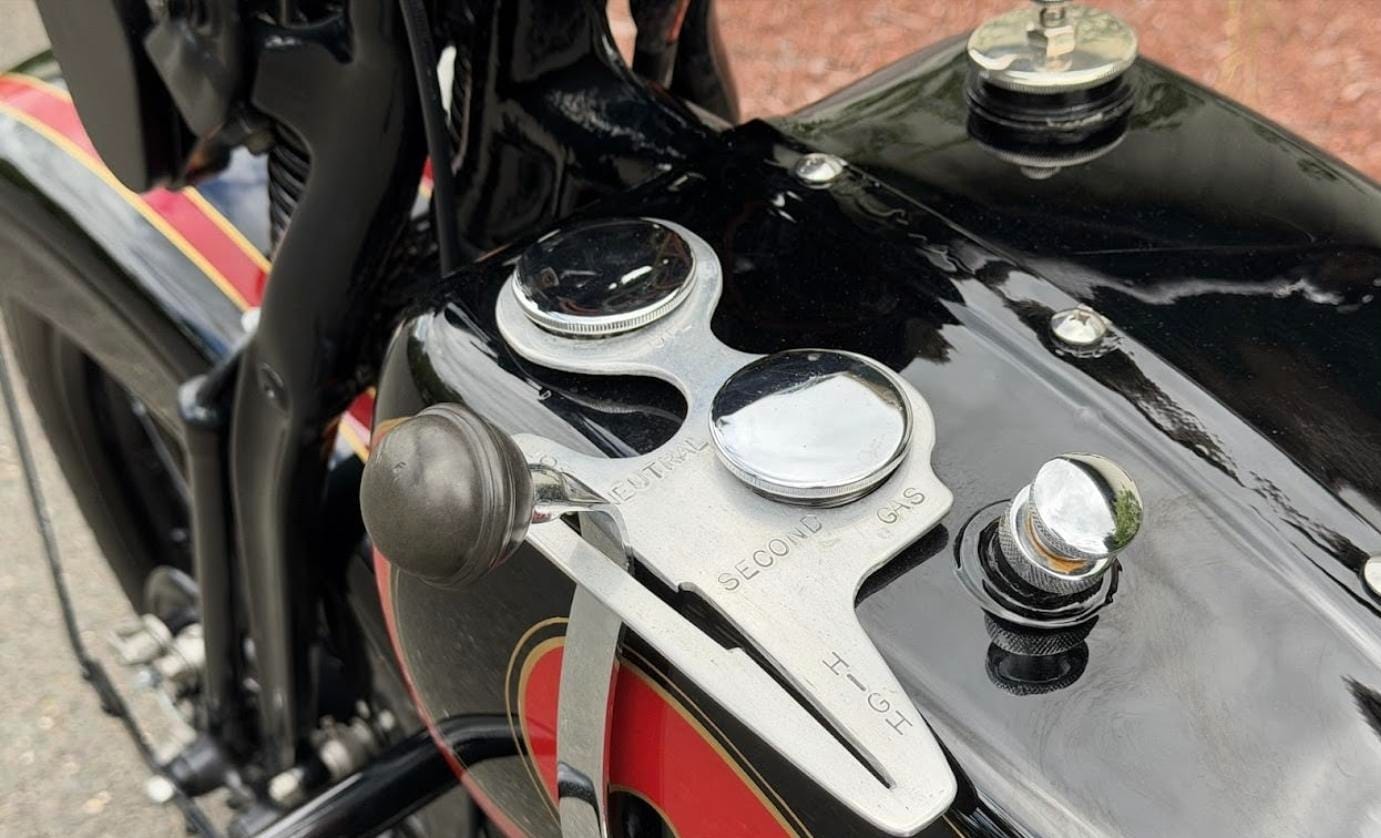
The 74 cubic inch side-valve V-twin produced 30 bhp at 4,000 rpm with a 4.5:1 compression ratio. Drive ran through a multi-plate dry clutch to a three-speed transmission shifted by hand on the tank, with the clutch worked by a foot pedal. A leading-link springer fork handled the front, a rigid hardtail and sprung saddle handled the rear, and top speed worked out to a respectable 85 mph.
The flathead the company had nearly destroyed itself launching ended up being one of the designs that carried it through the Depression. Production across the range fell from around 21,000 motorcycles in 1929 to roughly 10,500 in 1931, and bottomed out near 3,700 units in 1933. Only Harley-Davidson and Indian survived among dozens of American makers, and the 74 cubic inch flathead soldiered on through 1936, even spawning a licensed Japanese version that lived on under the Rikuo name well into the postwar years.
The McQueen Connection
McQueen's appetite for vintage motorcycles was legendary, and this VL was sitting at his private Ventura County hangar and garage awaiting restoration when he died in 1980. The bike crossed the block at his 1984 estate auction, and in the 2000s it was acquired by McQueen memorabilia collector Mike Eisenberg, who carried out the cosmetic refurbishment it wears today.
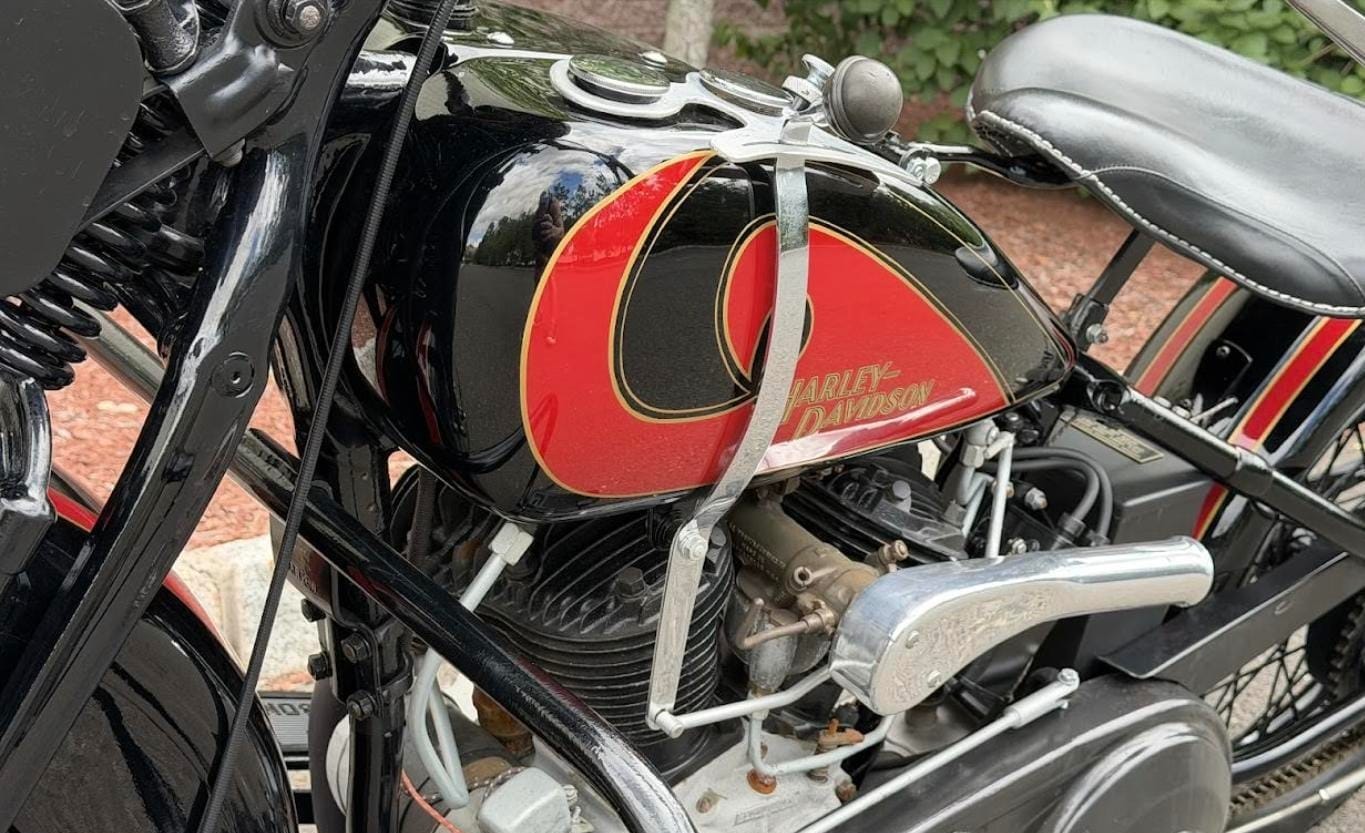
As presented, the tank is finished in black with gold-outlined red side stripes, with matching valanced fenders over a black hardtail frame and black steel rims wearing Dunlop Gold Seal K70 tires. The 74 cubic inch V-twin carries a Linkert M51 carburetor and a two-into-one fishtail exhaust, though it is currently non-running and shows surface rust on the pushrod tubes and assorted fasteners. The bike is titled to engine number 31VL6590.
Crucially for a celebrity-owned machine, the provenance is well documented. The sale includes a framed Certificate of Authenticity from the November 1984 McQueen estate auction in Las Vegas, signed by the actor's daughter and son, plus a framed bill of sale, bidder card, bidder ID and odometer statement from the same event. A show placard, a 1931 California license plate and a clean New Jersey title round out the paperwork. Offered at no reserve, it is the kind of rolling piece of Hollywood history that does not come around often.