
The collector car market, in your inbox
Classic car news, hand-picked vehicles, and auction coverage. Choose what lands in your inbox.
For decades, the collector car market followed a relatively predictable pattern. Buyers tended to purchase the vehicles they remembered from high school parking lots, dealership showrooms, racing broadcasts, and bedroom posters. As those buyers entered their peak earning years, demand pushed values higher and helped establish entire segments of the hobby. The relationship between nostalgia and value became one of the most reliable forces in the collector marketplace.
That pattern has not changed, but the generation driving it certainly has. For years, Baby Boomers represented the dominant force in the hobby, shaping demand through their purchasing decisions and helping determine which vehicles became blue-chip collectibles. Today, however, a different generation is increasingly influencing where money is flowing and which vehicles are attracting attention. The market is beginning to reflect their automotive experiences instead of those of previous generations.
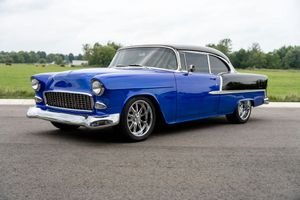
Baby Boomers spent decades building demand for vehicles from the 1950s, 1960s, and early 1970s. Hemi Mopars, Tri-Five Chevrolets, Shelby Mustangs, Corvettes, and full-size American classics became the foundation of the collector hobby because they represented the aspirational vehicles of that generation's youth. These were the cars many Boomers wanted but could not afford when they were young, making them natural targets once disposable income became available. For years, those vehicles dominated auction headlines and collector discussions.
Today, Generation X is increasingly entering its prime collector years. Many are now in their late 40s and 50s, often with significantly more disposable income than they had during the early days of the internet-fueled enthusiast boom. As a result, the vehicles that shaped their automotive dreams are becoming more important to the market. Industry observers have repeatedly noted that collector demand tends to follow generational wealth and nostalgia, with vehicles from the 1980s and 1990s increasingly becoming the focus of bidding activity and collector interest.
The result is a market that looks very different from the one many collectors grew up with. Vehicles that were once dismissed as used cars are now appearing at major auctions and commanding serious money. At the same time, some traditional collector segments are no longer experiencing the explosive growth they once enjoyed. The center of gravity is shifting, and the vehicles benefiting from that shift often share one thing in common: they are the cars Generation X grew up wanting.
The Fox Body Mustang Is No Longer The Cheap Mustang

For years, Fox Body Mustangs occupied an awkward place in the collector world. They were too new for traditional collectors, too common to be viewed as rare, and too old to attract buyers looking for modern performance. As a result, many were modified, raced, neglected, or simply used as affordable transportation. Few people viewed them as future collectibles.
That reality has changed dramatically over the past decade. Generation X grew up during the peak of the Fox Body era, and the 5.0-liter Mustang became one of the defining enthusiast vehicles of the 1980s and early 1990s. These cars appeared in magazines, movies, television shows, and local street racing scenes, creating a strong emotional connection for an entire generation of enthusiasts. Today, many of those enthusiasts have reached the point where they can finally buy the cars they once admired.
Clean, unmodified examples have become increasingly difficult to find. Years of modifications and hard use have reduced the supply of original cars, making survivors considerably more desirable. As supply shrinks and nostalgia grows, buyers are placing greater value on originality, documentation, and condition. What was once considered an entry-level performance car is increasingly viewed as an important part of modern American performance history.
The Dodge Viper Represents A Lost Era

Few vehicles better capture Generation X's automotive imagination than the Dodge Viper. When the Viper debuted in the early 1990s, it felt almost rebellious in its approach to performance. Massive V10 power, dramatic styling, a manual transmission, and virtually no electronic safety aids created a driving experience unlike anything else available from a domestic manufacturer. It was a vehicle that demanded respect and rewarded skill.
Boomer collectors often gravitated toward big-block muscle cars because those were the performance vehicles they desired when they were young. For many Gen X enthusiasts, the Viper occupies a similar position. It was the poster car, the dream machine, and the vehicle that represented unapologetic performance during an era when manufacturers were becoming increasingly cautious. That emotional connection continues to influence collector demand today.
The appeal extends beyond nostalgia. Modern performance cars continue moving toward electrification, automation, and software-controlled performance. The Viper represents the opposite philosophy, and that uniqueness has helped attract growing collector interest. Limited-production variants, special editions, and low-mileage examples continue generating attention at auction, suggesting buyers increasingly recognize their long-term significance.
The Acura NSX Finally Found Its Audience

The original Acura NSX spent years being respected more than desired. Collectors appreciated the engineering, praised its reliability, and acknowledged its influence on the supercar market. However, the broader collector community often favored European exotics that carried greater prestige or more dramatic styling. As a result, the NSX frequently remained overlooked despite its historical importance.
Generation X sees the NSX differently. Many grew up during the Japanese performance boom of the 1990s, when the NSX represented the pinnacle of Japanese engineering and innovation. It appeared in magazines, video games, enthusiast forums, and countless automotive discussions as a genuine alternative to established European supercars. For many enthusiasts, it was proof that Japan could compete at the highest levels of performance.
As those enthusiasts gained purchasing power, demand followed. The NSX has become one of the clearest examples of how generational shifts can dramatically reshape collector perceptions. What was once considered an underappreciated performance car is now widely recognized as one of the defining vehicles of its era. The market's reassessment of the NSX may serve as a blueprint for how other Gen X favorites could evolve in the coming years.
Porsche 996 Turbo: Rewriting The Narrative
Few vehicles have undergone a more significant reevaluation than the Porsche 996 Turbo. For years, collectors focused on the styling controversies that surrounded the 996 generation and largely ignored its engineering accomplishments. The result was a car that often traded at a discount compared to other Porsche performance models despite offering remarkable capability and performance. Many enthusiasts considered it one of the best values in the Porsche world.
Generation X buyers tend to view the car through a different lens. Many remember the 996 Turbo as a technological marvel that delivered supercar performance without sacrificing usability. The Mezger-engine architecture, available manual transmission, and all-wheel-drive system created a package that remains impressive even by modern standards. Those qualities have become increasingly important as buyers search for analog-era performance cars.
As air-cooled 911 values continue to remain out of reach for many enthusiasts, buyers have increasingly turned their attention toward vehicles like the 996 Turbo. The market appears to be recognizing that these cars may have been overlooked for years. What was once considered the bargain of the Porsche world is steadily moving toward broader collector recognition.
The Japanese Performance Boom Is Real

One of the clearest distinctions between Boomer and Gen X collecting habits involves Japanese performance vehicles. While traditional collectors focused heavily on American muscle, European sports cars, and pre-war classics, Generation X developed its automotive identity during the rise of Japanese performance. The vehicles that captured their attention often came from a very different part of the world.
Cars such as the Acura NSX, Toyota Supra, Nissan Skyline GT-R, Mazda RX-7, and Mitsubishi 3000GT VR-4 benefited from magazine coverage, video games, import culture, and later internet communities. These vehicles became cultural icons for many enthusiasts long before they became accepted collector cars. Their influence extended beyond traditional automotive media and into broader entertainment and digital culture.
Research into younger collector demographics has repeatedly highlighted the influence of racing games, enthusiast forums, online communities, and media franchises in shaping automotive preferences. Enthusiasts who grew up with titles like Gran Turismo and later Forza often developed strong attachments to vehicles that older generations never viewed as collectible. That influence continues to reshape the collector market as those enthusiasts gain purchasing power and begin competing for the best examples.
Why Some Traditional Classics Are Slowing
None of this means traditional collector vehicles are disappearing. High-quality examples of historically significant cars will always attract attention from serious collectors. Exceptional Shelby Mustangs, Hemi Mopars, Corvettes, and blue-chip European classics remain important parts of the market and continue generating strong results when the right cars come to auction.
However, the center of gravity is shifting. Some vehicles that once enjoyed enormous demand now face a shrinking pool of emotionally connected buyers. Generational demand has always been one of the strongest forces in the collector market, and even iconic vehicles are not immune to changing demographics. The market is not abandoning these cars, but it is no longer relying on them as heavily as it once did.
The market is not rejecting traditional classics. Instead, it is expanding to include new definitions of collectibility. As newer generations enter their prime collecting years, the range of vehicles considered desirable continues growing. That evolution may ultimately strengthen the hobby by attracting a broader range of enthusiasts and interests.
The Bigger Picture
The collector car market has always been driven by emotion. People rarely spend significant money on vehicles solely because of production numbers, rarity, or investment potential. They buy the cars they dreamed about when they were young, the cars they admired in magazines, or the vehicles that left lasting impressions on them. Emotional attachment remains one of the most powerful forces in the hobby.
Today, Generation X is increasingly shaping those dreams. That means buyers are paying attention to Fox Body Mustangs, Dodge Vipers, Acura NSXs, Porsche 996 Turbos, Japanese performance icons, and other vehicles that were once considered too new or too ordinary to be collectible. The market is reflecting their experiences, memories, and aspirations.
Many of these cars are no longer cheap, and some may no longer be undervalued. However, they continue demonstrating one of the most important truths in the collector market: every generation eventually brings its own heroes with it. Right now, Generation X is bringing a very different garage than the one that built the hobby, and the market is evolving accordingly.