
The collector car market, in your inbox
Classic car news, hand-picked vehicles, and auction coverage. Choose what lands in your inbox.
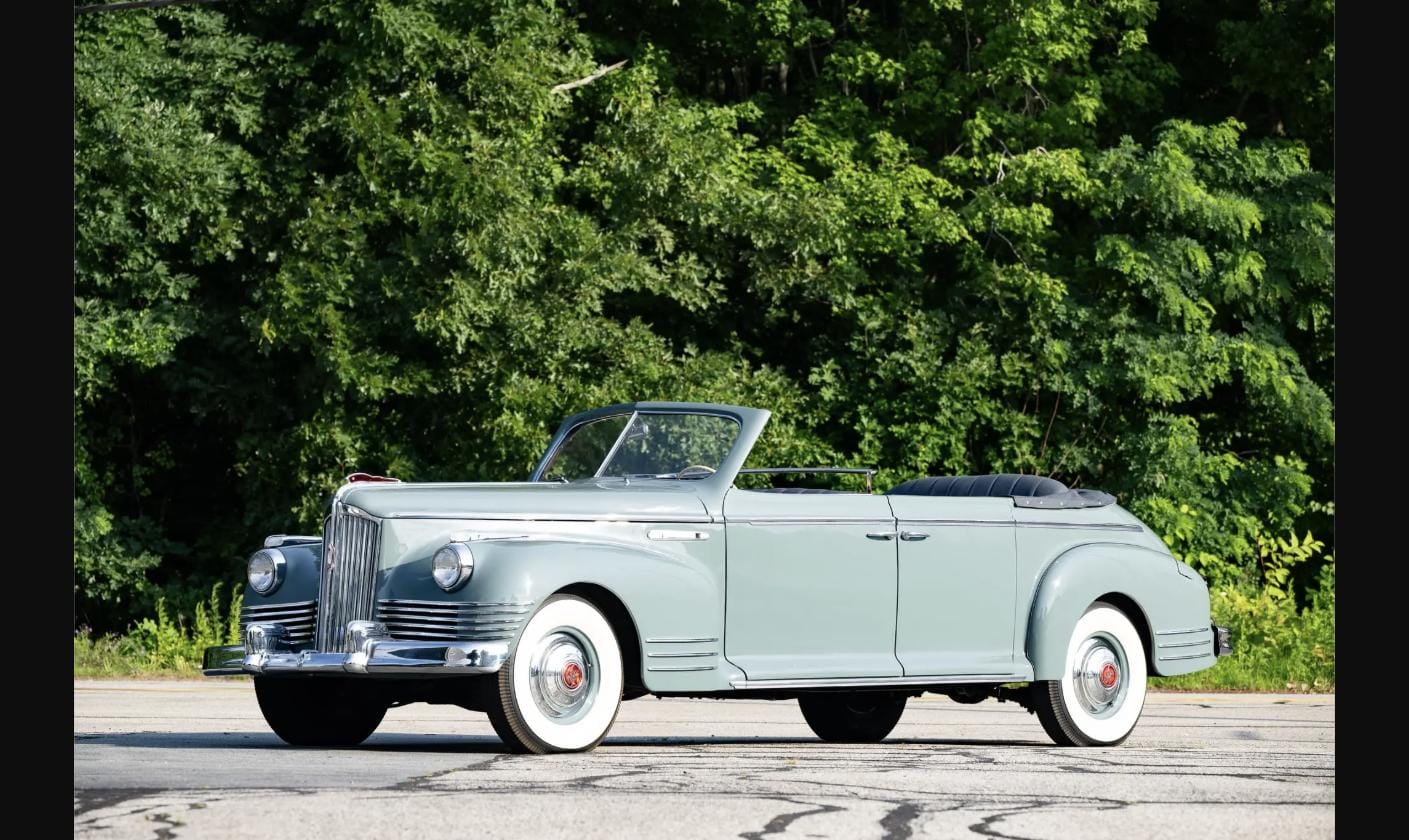
A rare slice of Cold War automotive history has surfaced stateside. A 1950 ZIS-110B Phaeton currently listed on Bring a Trailer is drawing serious attention from collectors captivated by its incredible backstory. Built in Moscow by Zavod imeni Stalina, the factory whose initials give the car its name, this drop-top is said to be one of roughly 100 convertible examples produced during the model's 1946-to-1958 run, making it a genuine unicorn even by the standards of the collector car world.
A Cold War Chauffeur Car With a Wartime Escape Story
What sets this particular example apart isn't just its rarity, but where it spent most of its working life. Per the listing, this ZIS-110B reportedly spent time in Kyiv starting in 1955, one of only three such phaetons handed over for ceremonial transport of senior military officers and government officials in the city. The car apparently stayed in that role through 1980, then passed in 1986 to the chairman of the Kyiv Avtoveteran Club, a fitting caretaker for a piece of Soviet motoring heritage. It remained in Ukraine until the current owner acquired it from that chairman's estate in 2021, had it refurbished, and then shipped it to the United States following the 2022 Russian invasion, adding an unusually poignant chapter to an already remarkable ownership history.
Packard DNA Hiding Under a Soviet Skin
Pop the hood, or rather peer under that long, low snout, and you'll find a 6.0-liter L-head inline-eight paired with a column-shifted three-speed manual. The shape is no accident: ZIS engineers built the 110 lineup by closely studying prewar Packard Custom Super Eight limousines, borrowing heavily from Packard's proportions and mechanical layout to create a suitably imposing car for the Soviet elite. This example wears blue paint over blue leather, carries a gray convertible top with rear quarter side curtains, and includes era-correct touches like fold-down middle-row jump seats, woodgrain trim, four-wheel hydraulic drum brakes, and a push-button radio. The seller shows roughly 17,000 miles on the odometer, and the car carries a clean Montana title that identifies it as a 1950 ZISTM.
What Hagerty's Data Says About This Market
Because so few ZIS phaetons exist and virtually none have crossed the block in the US, there's no dedicated Hagerty Price Guide entry to benchmark this car directly. But the Packard lineage it borrowed from offers a useful stand-in. Hagerty's valuation tools currently peg a 1949 Packard Super Eight Victoria convertible, its closest stylistic and mechanical cousin, at roughly $42,400 in #3 (Good) condition, with values spanning about $34,000 to $52,000 and climbing nearly 27 percent over the past year. That kind of momentum in the broader market for large, coachbuilt-feel prewar-style convertibles suggests real collector appetite right now, and it hints that a documented, ceremonially-used Soviet counterpart with this much provenance could pull outsized interest from buyers hunting for something nobody else in their garage club will ever have. It's a similar dynamic to what we've seen with other oddball, high-provenance survivors, like the one-off gold-plated 1953 Cadillac concept that resurfaced after 73 years out of public view, or the increasingly strong prices paid for pre-war-era classics crossing the block at events like Kruse's Auburn sale.
Bidding Is Just Getting Started
As of this writing, bidding on the ZIS-110B sits at $19,500 with the auction scheduled to close on September 9, and with more than 300 watchers already tracking the listing, expect that number to move considerably before the gavel falls. For collectors drawn to former military and government vehicles with real, verifiable history, this phaeton keeps good company with other unusual service vehicles finding new life stateside, including a modified 1993 AM General M998 Humvee that recently drew its own wave of bids. Whoever wins this ZIS won't just be buying a car, they'll be buying a physical artifact of Soviet ceremonial life that somehow found its way out of Ukraine and onto American soil.