The collector car market, in your inbox
Classic car news, hand-picked vehicles, and auction coverage. Choose what lands in your inbox.
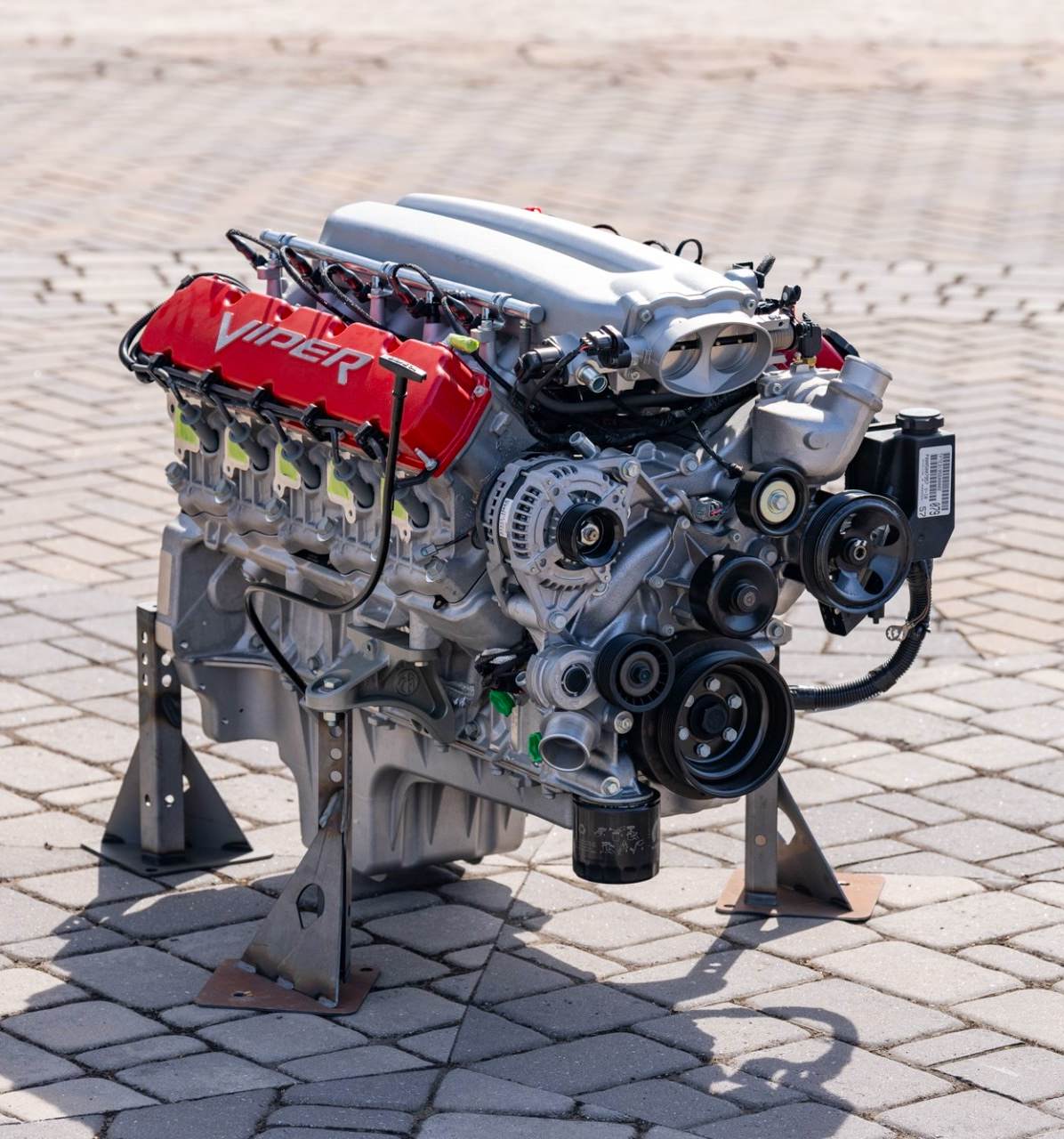
Few American engines have ever sounded quite as unapologetic as the Dodge Viper's V10, and this particular example takes the formula even further. Built by Ilmor Engineering, this 8.3-liter (505-cubic-inch) crate engine traces its roots to the third-generation Viper powerplant, but it leaves the factory rated at 625 horsepower at 5,800 rpm and 600 lb-ft of torque at 4,700 rpm. It is now bound for the Mecum auction block at the end of September.
The Ilmor name doesn't usually surface in conversations about cast-iron-spirited, pushrod American muscle. The British firm made its reputation in open-wheel racing, building turbo Indy car engines for Chevrolet before designing the Mercedes-Benz V10s that carried Mika Hakkinen to back-to-back Formula 1 titles in 1998 and 1999. So how did a company steeped in grand prix engineering end up with its name on a Viper-derived crate motor?
The story, as Ilmor tells it, began around 2001 and 2002 at the company's Plymouth, Michigan facility. Ilmor had been brought in by DaimlerChrysler to help sort out the Viper V10's oiling system, and a Viper engine was running on one dyno while an offshore powerboat racing engine spun away in a cell down the hall. Comparing the two side by side, Ilmor's engineers realized the big-bore pushrod V10 had serious potential as a marine powerplant. That lightbulb moment eventually grew into Ilmor's MV10 line of high-performance boat engines, which used Viper-based blocks and produced anywhere from 550 to 725 horsepower.
Those marine engines went on to real success, powering the Fountain Worldwide team to Powerboat P1 Evolution Class World Championships in 2007 and 2008. In other words, an engine conceived as Detroit's loud answer to the Corvette wound up winning offshore racing titles overseas under a different badge entirely.
The donor engine deserves a little context of its own. When the Viper debuted in 1992, its 8.0-liter V10 made 400 horsepower from an aluminum block whose castings were developed by Lamborghini, then a Chrysler subsidiary, with architecture drawn from Chrysler's long-running LA V8 family. Refinement through the second-generation cars pushed output to 450 horsepower, but rivals like the Corvette and Porsche 911 kept climbing, and the Viper needed an answer.
That answer was the Gen III V10. Engineered for the new ZB I chassis, it kept the fundamental layout - a 90-degree V, two pushrod-actuated valves per cylinder, an aluminum block with cast-iron liners, and aluminum heads - while reworking nearly everything else. Bore and stroke both grew, lifting displacement to roughly 505 cubic inches, and the factory rating climbed to 500 horsepower. Just as importantly, the engine shed weight, dropping to around 500 pounds thanks to new castings, lighter accessories, and revised internals. In a front-mid-engined car where the V10 dominates the nose, that diet mattered enormously for balance and handling.
Dodge dropped the Gen III into the 2003 Viper SRT-10 roadster and kept it through 2006, when a coupe rejoined the lineup with output up to 510 horsepower. The same engine also powered the Dodge Ram SRT-10, the 154-mph factory pickup that mated the 8.3-liter V10 to a Tremec six-speed. By 2007 the Gen III had done its job, and Chrysler moved on to a larger 8.4-liter Gen IV V10 for 2008.
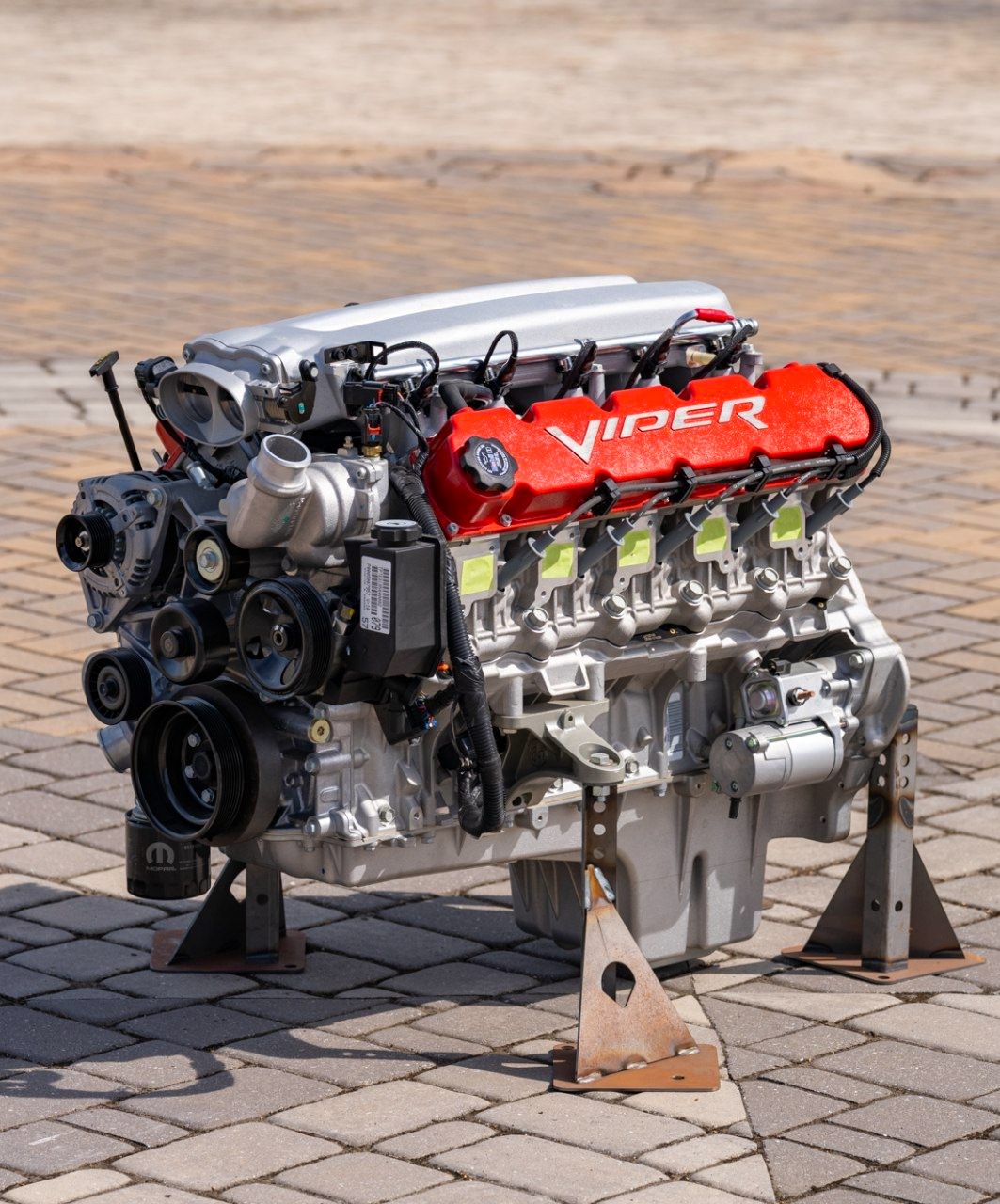
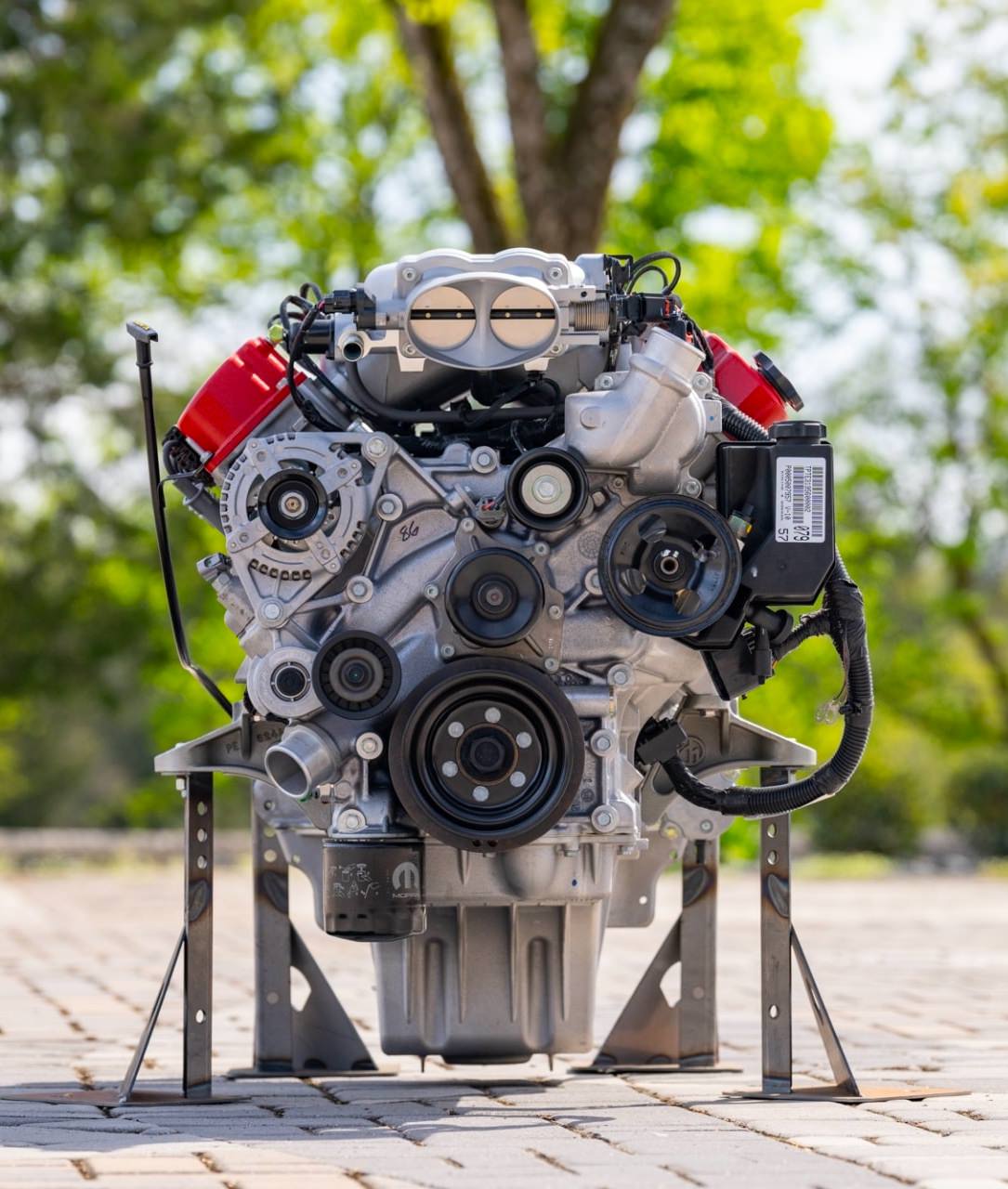
The engine crossing the block at Mecum is Ilmor's take on that Gen III V10, supplied as a factory-built long-block. Beyond the headline 625 horsepower and 600 lb-ft, it runs a 10.2:1 compression ratio and is happy on premium 93-octane fuel. Inside sits a forged 4340 steel crankshaft, forged pistons, and a hydraulic roller camshaft, with air fed through a 67 mm throttle body. The block and heads are precision-cast aluminum, and the package includes a closed-cooling system with integrated knock control. With headers fitted, dry weight comes in around 800 pounds.
For anyone plotting a serious restomod, a kit-car project, or simply a wild engine-swap statement piece, a rare Ilmor-built Viper V10 with this kind of pedigree doesn't come along often. It heads to Mecum at the end of September.
Images courtesy of Mecum.