

The return of a so-called “Ketchup and Mustard” Dodge Viper isn’t a celebration. It’s a reckoning.
Now listed on Cars and Bids, this 1996 Dodge Viper RT/10—one of just 166 built in its red-and-yellow color scheme—stands as a rolling monument to an industry that once confused shock value for substance. The car is rare, yes. It’s also a reminder of how aggressively the 1990s auto industry chased attention, even when restraint, refinement, or responsibility would have served buyers better.
There may be no American car more emblematic of that era’s mindset than the Viper. When Dodge launched the Viper in 1992, it wasn’t subtle and it wasn’t apologetic. It borrowed visual cues from the Shelby Cobra Daytona, packed an enormous V-10 under its hood, and chased European supercar numbers without bothering to soften the edges. By the time the second generation arrived, the strategy hadn’t changed—just the volume.
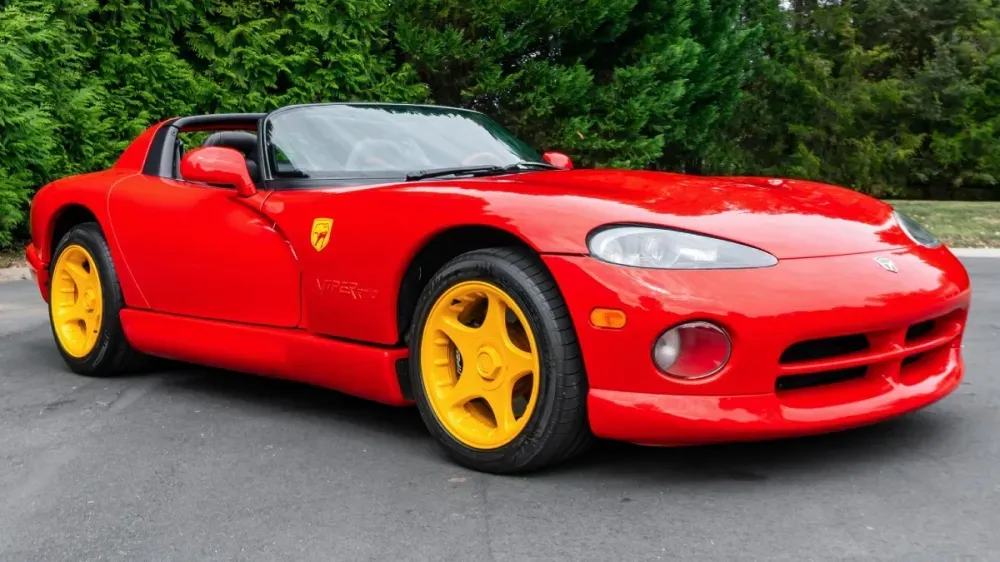
The 1996 RT/10 delivered more power, jumping to 415 horsepower and 488 pound-feet of torque from its 8.0-liter V-10. Dodge marketed that escalation as progress. In reality, it reinforced the same old playbook: bigger numbers, louder visuals, and a belief that excess alone justified the product.
Nothing captures that better than the “Ketchup and Mustard” treatment. Viper Red paint clashed intentionally with yellow graphics and matching wheels, turning a serious performance car into a rolling billboard. It looked bold in brochures. On the road, it was a gimmick that hasn’t aged gracefully.
Inside, the car mixes black leather with red accents and includes air conditioning and an audio system—both fitted with aftermarket components and wiring. Even then, the Viper couldn’t escape the contradiction of trying to be raw and extreme while patching in creature comforts after the fact.
With 25,800 miles on the engine and bidding already at $31,000, collectors clearly still want it. But what they’re really buying is a snapshot of an industry moment when restraint was ignored, design theatrics were rewarded, and the consequences were left for owners to manage.
The modern auto industry loves to pretend it has moved on. Cars like this prove why it had to.