

A partially disassembled 1967 Maserati Mistral 4000 alloy coupe is back on the market after years of inactivity, offered as a non-running restoration project with a documented ownership trail.
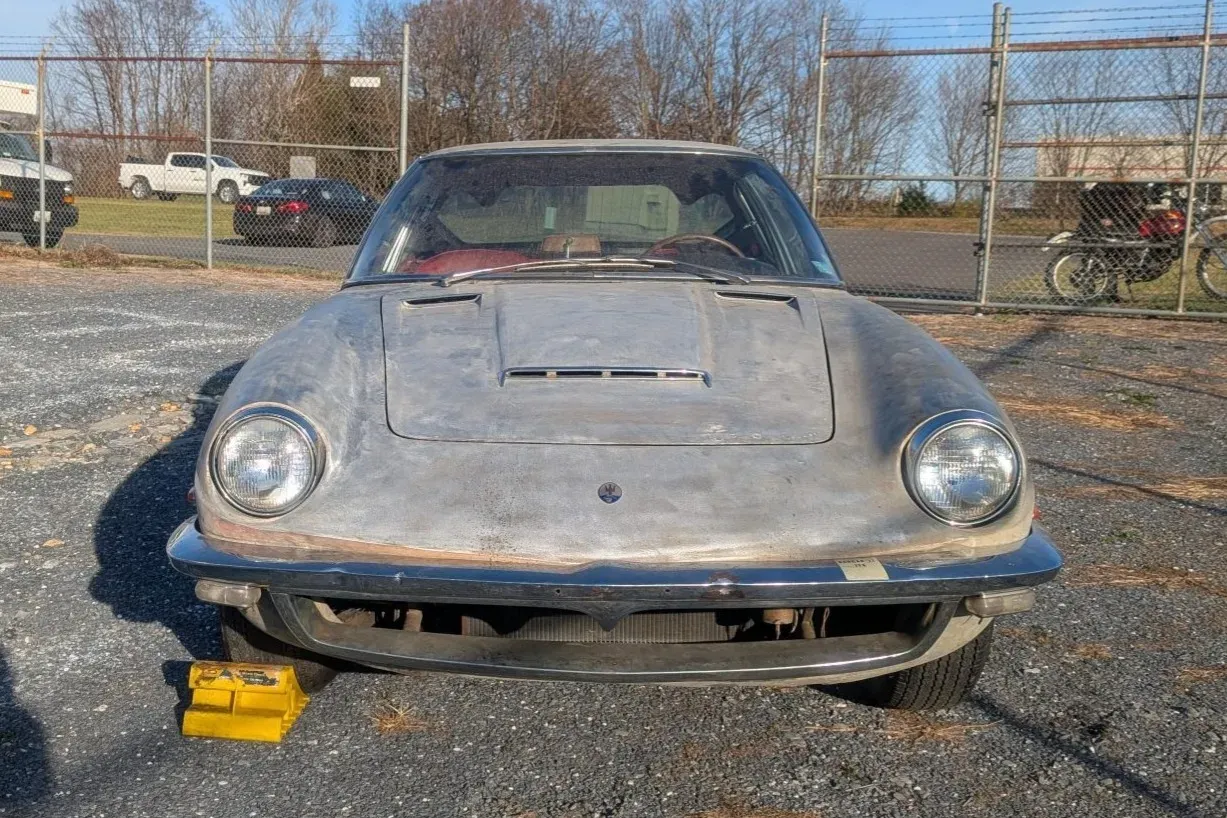
The Mistral coupe debuted in 1963 and remained in production through the end of the decade. Styled by Pietro Frua, the model featured fastback proportions and was built on a steel box-section frame. Bodywork was supplied in either steel or aluminum by Turin-based coachbuilder Maggiora. Approximately 830 coupes were produced across all variants, with about 450 equipped with the 4.0-liter inline-six engine.
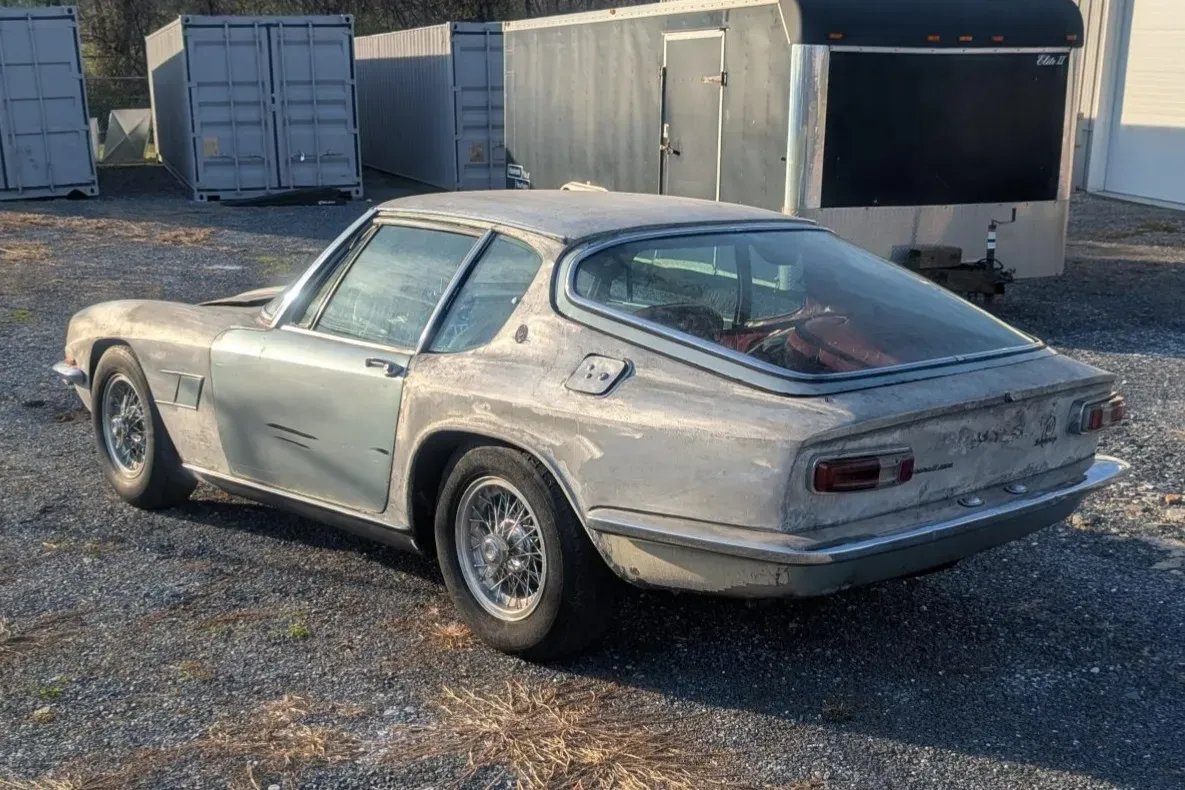
This example, chassis 1044, is an aluminum-bodied car that was previously stripped and partially disassembled during an earlier refurbishment effort. Additional paint and body stripping took place after the current owner acquired the vehicle as a non-running project in March 2020. Silver paint remains on the doors, while galvanic corrosion is visible at points where the aluminum body meets the steel frame. A fender-mounted mirror is missing, and most of the listing photographs date to 2024.
The car rides on 15-inch Borrani wire wheels secured with three-eared knock-offs and fitted with older Pirelli tires. Disc brakes are present at all four corners, paired with a suspension layout that includes independent front coil springs and a live rear axle with leaf springs and hydraulic shocks.
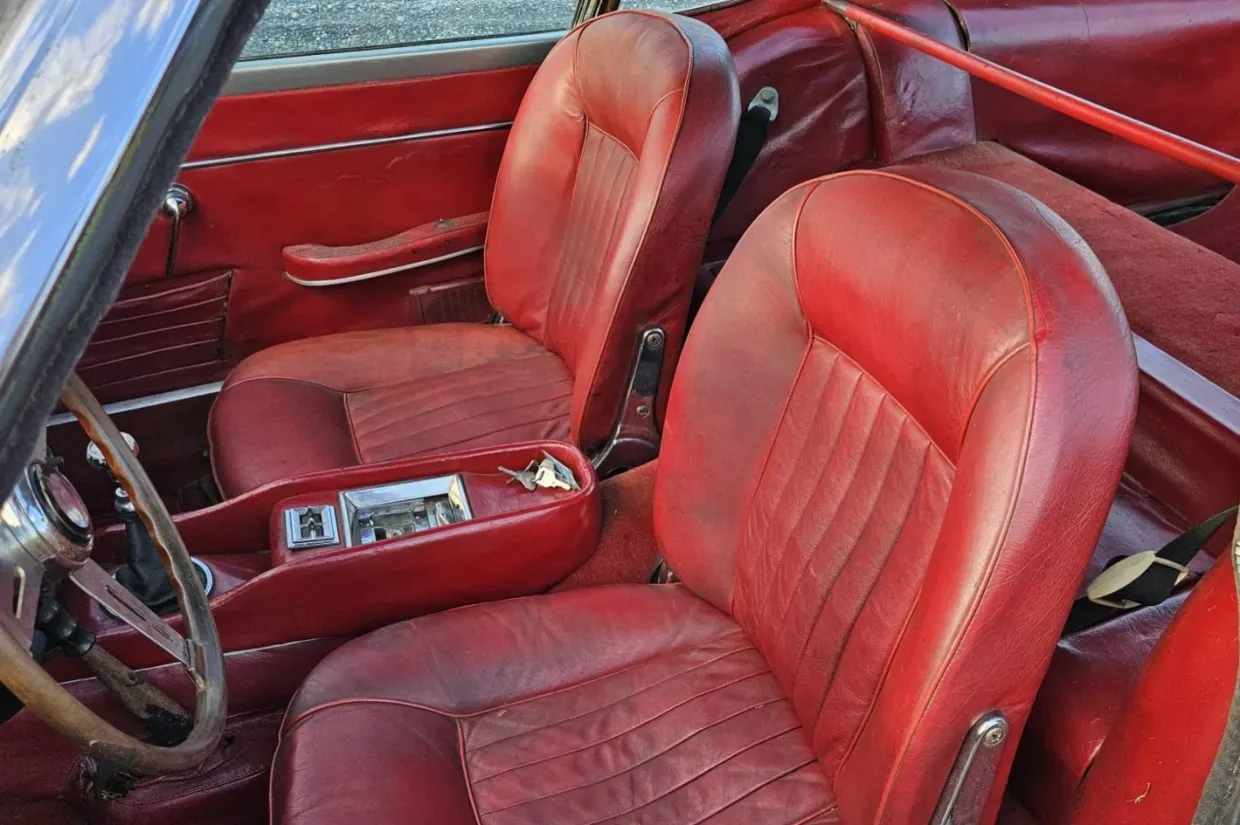
Inside, the cabin retains red leather bucket seats, matching trim, red carpeting, and a black dash. Equipment includes power windows and air conditioning, though the radio, sun visors, spare wheel, and spare well cover are absent. Instrumentation includes a Smiths speedometer and tachometer along with auxiliary gauges, showing 39,000 miles, though total mileage is unknown.
Power comes from a 4.0-liter twin-plug, dual-overhead-cam inline-six with Lucas fuel injection, paired with a five-speed manual transmission. The engine has reportedly not run in more than three decades but is said to turn by hand. Rust is noted on the frame and underside components, underscoring the scope of work ahead for the next caretaker.
Source