
The collector car market, in your inbox
Classic car news, hand-picked vehicles, and auction coverage. Choose what lands in your inbox.
The 1966 Chevrolet Corvette Convertible continues to hold a special place among American sports cars, and one well-preserved example is highlighting why the second-generation Corvette remains one of the most celebrated designs in the model’s history. Finished in Nassau Blue and powered by its original numbers-matching drivetrain, the convertible represents a blend of classic styling, V8 performance, and long-term enthusiast ownership that has kept the C2 Corvette highly sought after decades after production ended.
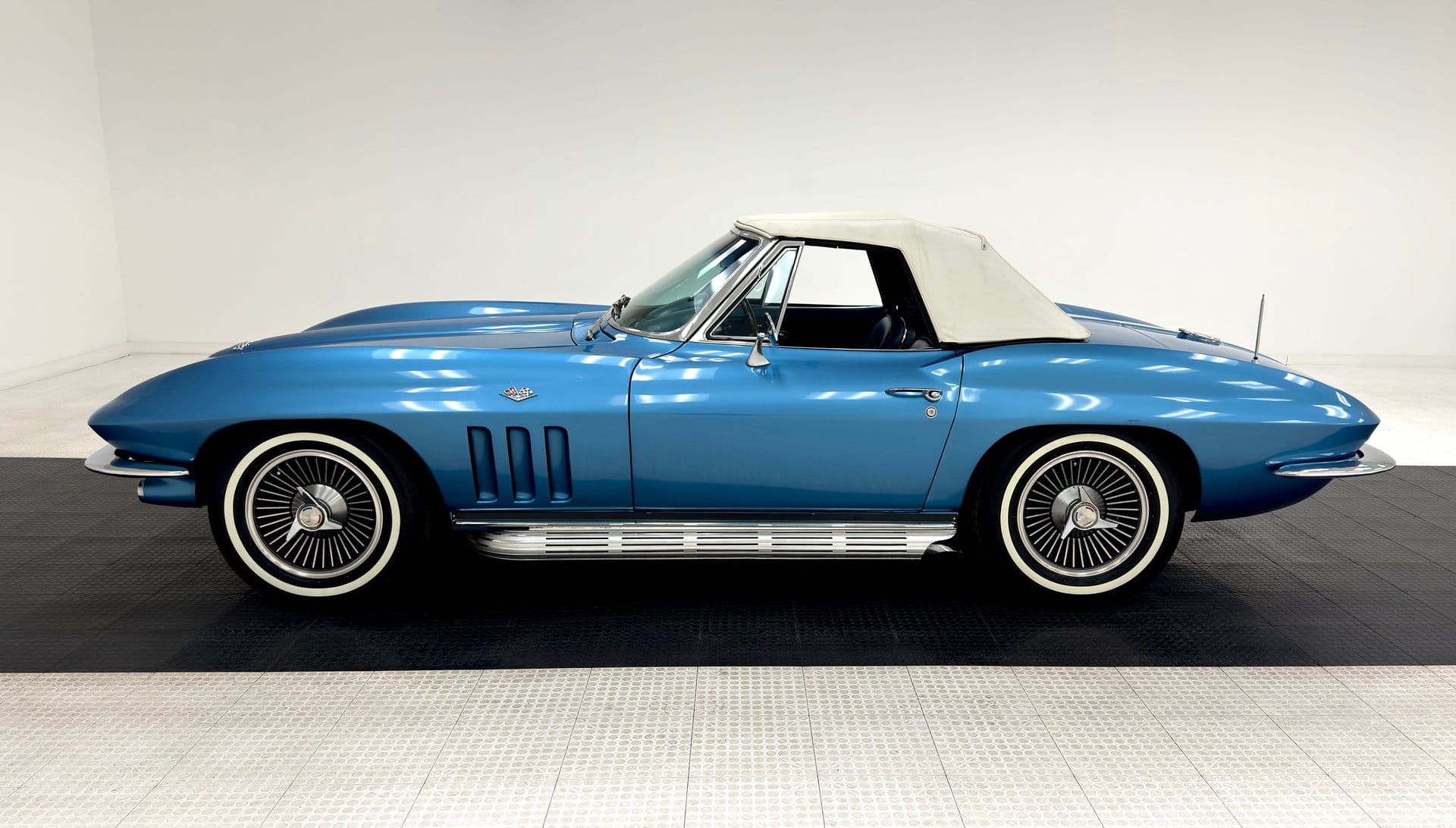
Chevrolet produced 27,720 Corvettes for the 1966 model year, including 17,762 convertibles. Among them, 6,100 were finished in Nassau Blue, while 7,591 were equipped with four-speed manual transmissions. The combination of color, drivetrain, and open-top configuration has helped solidify cars like this one as desirable examples of the era.
This particular Corvette has been owned by the same family for 25 years and carries a story tied closely to personal history. Purchased as the fulfillment of a promise connected to a 1966 wedding, the car spent much of its life being driven occasionally for relaxed top-down cruising and enjoyment rather than daily transportation.
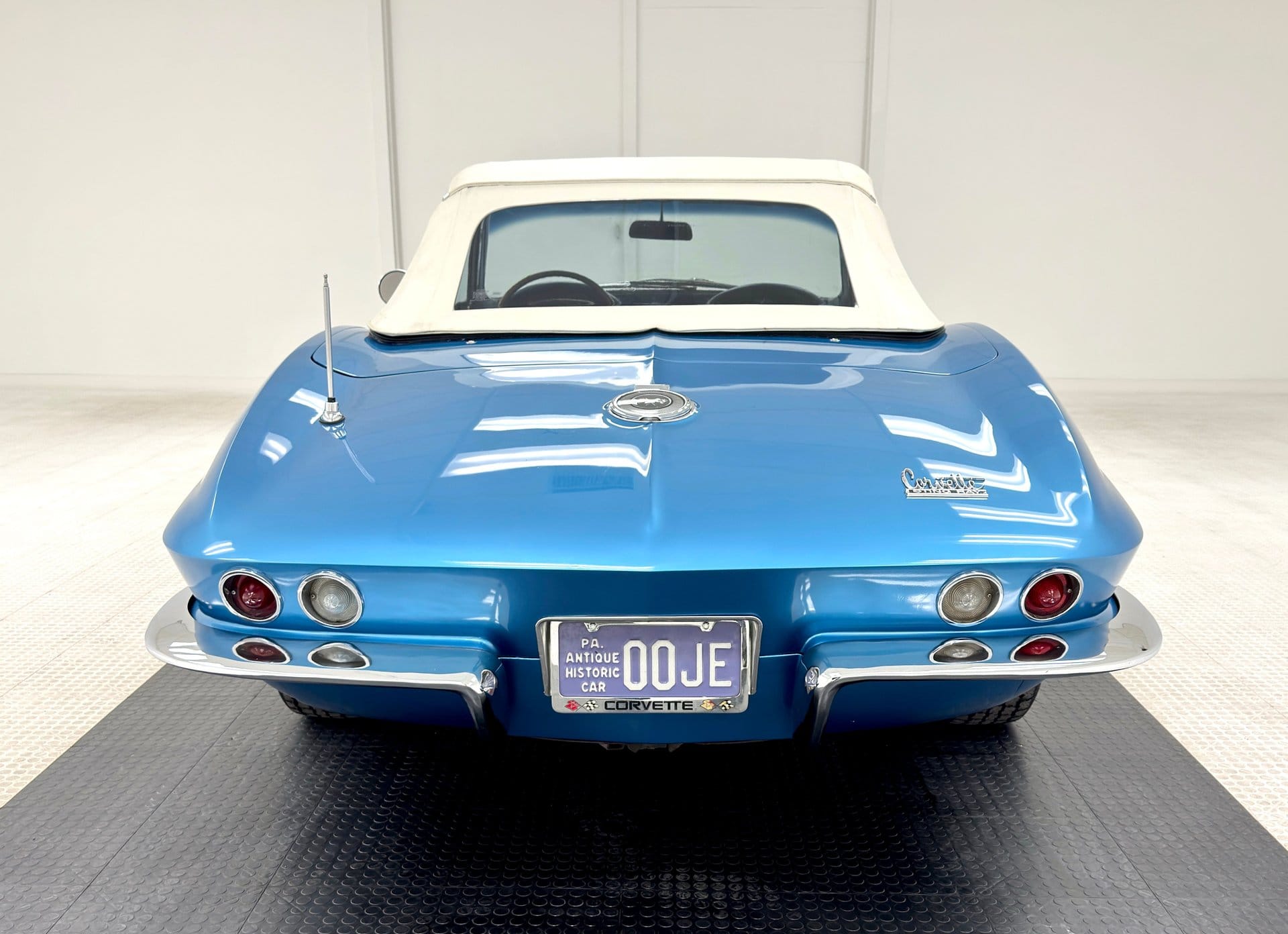
The exterior design remains one of the defining features of the C2 generation. The car’s pointed front end, sculpted body lines, raised fenders, and tapered rear styling gave the Sting Ray its unmistakable shark-inspired appearance. Chrome trim, side exhaust heat shields, knock-off wheel covers, and white wall tires reinforce the car’s period-correct presentation, while the white canvas convertible top adds contrast against the Nassau Blue paint.
Inside, the cabin continues the blue color theme with Bright Blue vinyl bucket seats, matching door panels, and blue carpeting throughout the interior and rear cargo area. The signature Corvette dashboard layout features the well-known coved gauge cluster, symmetrical instrumentation, and a center stack finished in matching Nassau Blue paint. A walnut three-spoke steering wheel and chrome manual shifter complete the driver-focused layout.
Under the hood sits the original numbers-matching 327 cubic-inch L79 V8 engine rated at 350 horsepower. The engine is paired with its original M20 Muncie four-speed manual transmission and a rear axle equipped with 3.70 gears and Positraction. Disc brakes at all four corners provided advanced stopping power for the era and helped establish the Corvette as a serious American performance car during the 1960s.
The car retains a driver-quality undercarriage showing typical age-related wear, including light surface rust and minor discoloration. Suspension components consist of coil springs up front with a rear setup featuring transverse strut rods, torque control arms, and a transverse leaf spring.
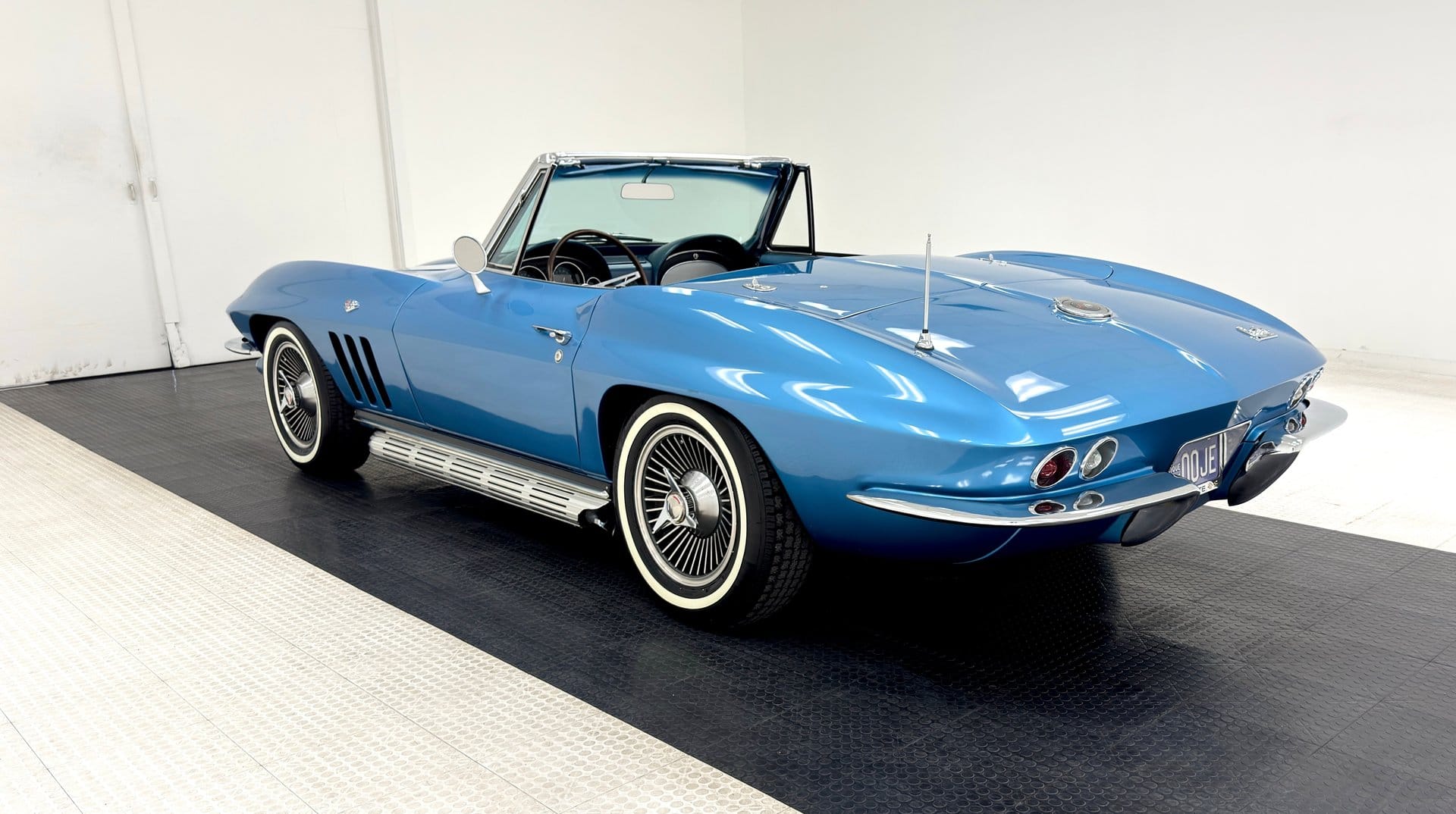
On the road, the Corvette delivers the type of analog driving experience that helped define classic American sports cars. The carbureted V8 starts easily, the side exhaust produces a deep exhaust tone, and the manual gearbox provides direct driver engagement. Smooth shifting, strong acceleration, and responsive handling continue to make the 1966 Corvette a favorite among enthusiasts seeking a pure and mechanical driving experience.
Nearly six decades after it first appeared, the C2 Corvette remains one of Chevrolet’s most iconic creations, blending timeless styling and V8 performance into a package that still resonates with collectors and enthusiasts today. See it here.