
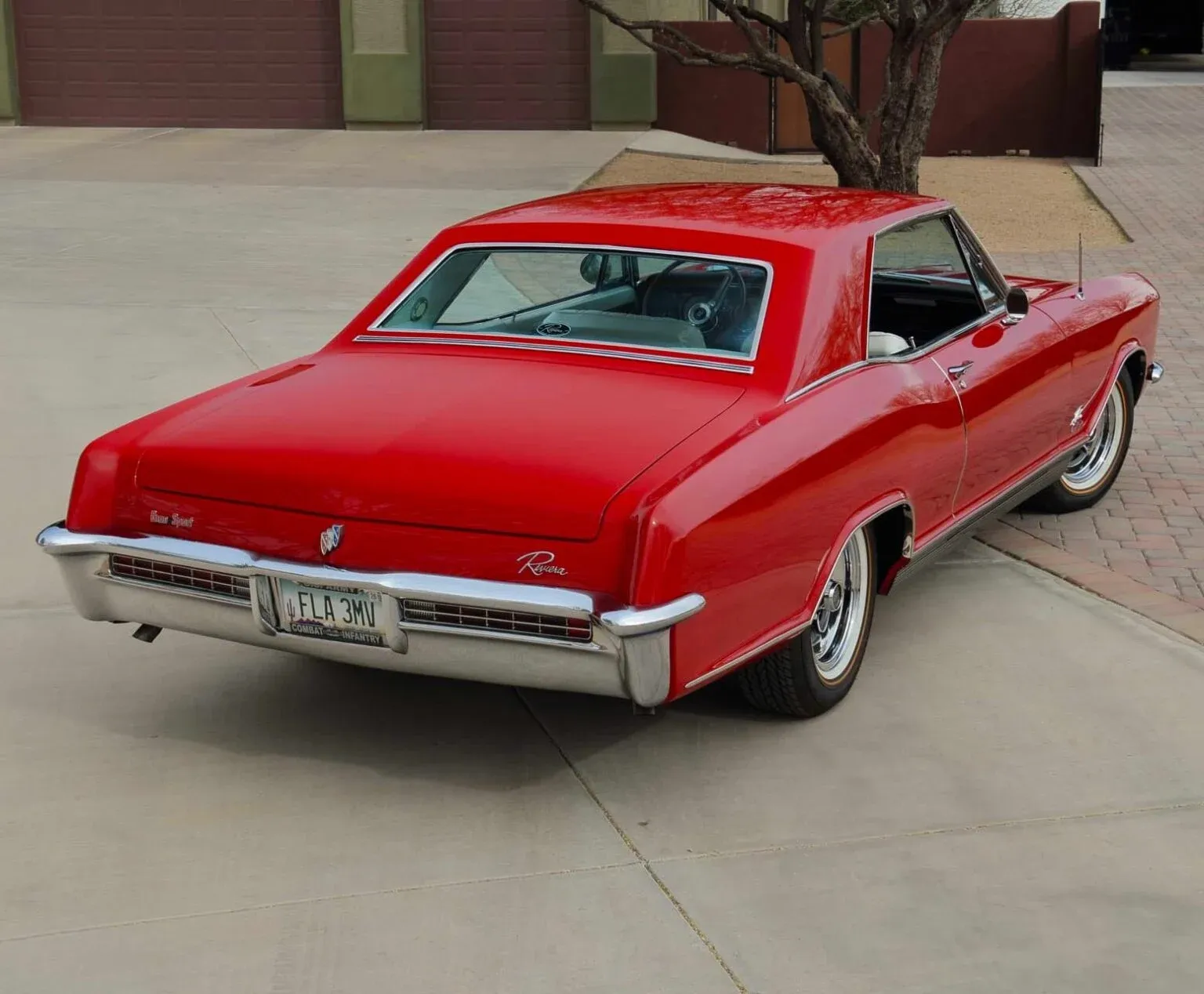
A restored 1965 Buick Riviera GS powered by Buick’s well-known “Nailhead” V8 is set to cross the auction block at Mecum’s Glendale sale on March 20.
The vehicle represents the top performance specification offered for the Riviera during the 1965 model year. Its restoration was completed in 2017, and the car retains its matching-numbers 425 cubic inch V8 engine. Known for its distinctive design and strong torque output, the engine produces 360 brake horsepower and 465 pound-feet of torque.
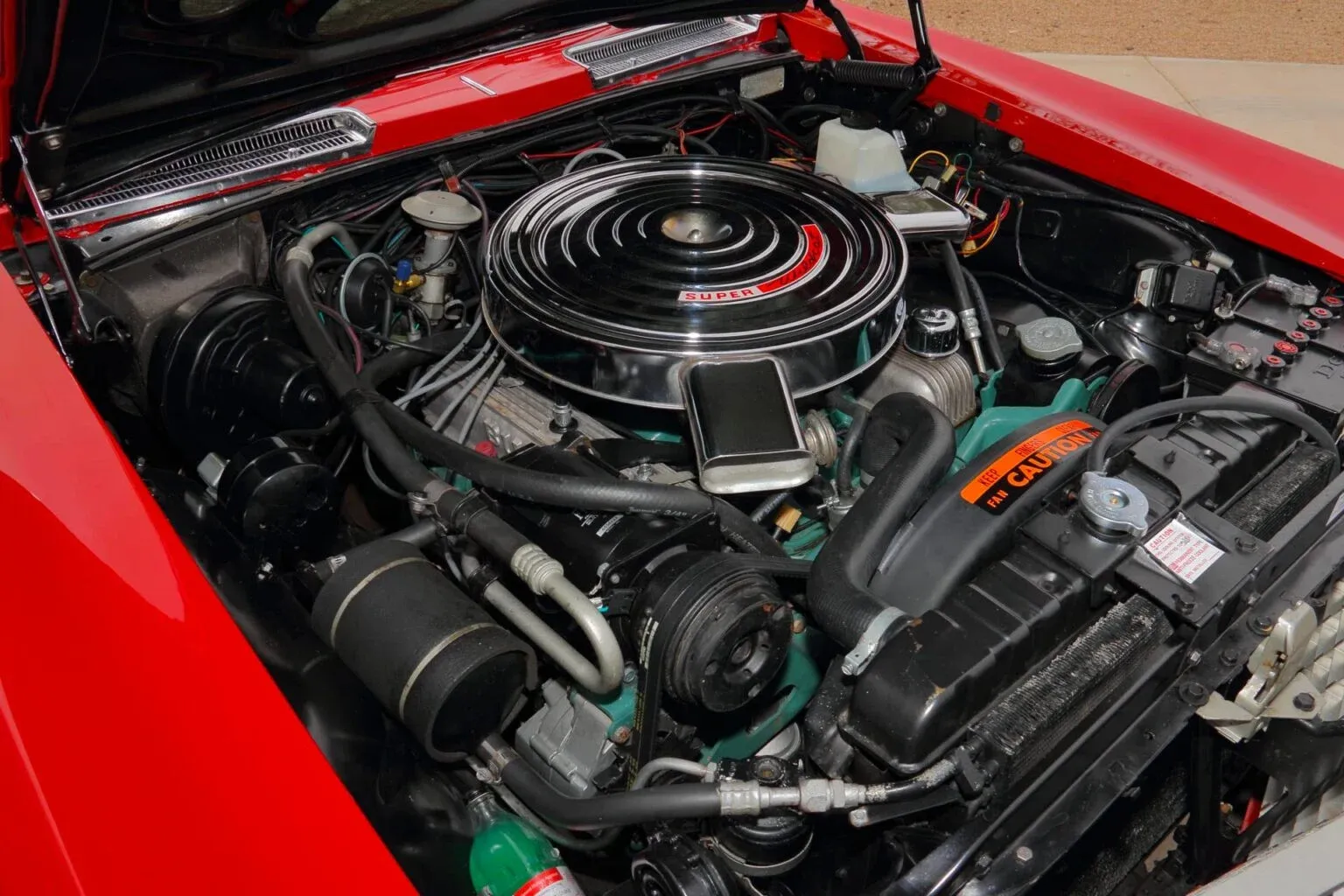
The powerplant is paired with a Turbo 400 three-speed automatic transmission, sending power to the rear wheels in keeping with the Riviera’s traditional front-engine, rear-wheel-drive layout. The car rides on factory wheels fitted with period-correct tires.
Finished in code 624 Flame Red, the coupe features a white vinyl interior accented by wood trim and a center console. The cabin is equipped with several convenience features typical of the era’s personal luxury cars, including power steering, power brakes, power windows, an AM/FM radio, a power antenna, and a power trunk release. The sale also includes a spare wheel and jack.
The Riviera debuted in 1963 as General Motors’ response to the growing popularity of the Ford Thunderbird. Buick developed the car as a focused entry into the emerging personal luxury segment, emphasizing distinctive styling, strong V8 performance, and a more refined design compared with many large American luxury cars of the time.
The first-generation Riviera, produced from 1963 through 1965, was built on a platform unique to the model and stood apart from the rest of Buick’s lineup. Under the direction of General Motors design chief Bill Mitchell, the car adopted a sleek hardtop coupe shape with a pronounced coke-bottle silhouette.
One of the most recognizable styling features of the early Riviera was its hidden headlight arrangement on certain variants. The lights were concealed behind doors integrated into the fender grilles, giving the front end a clean, uninterrupted appearance when closed.
The design received significant attention from automotive and industrial design figures when the Riviera debuted, earning praise for its restrained proportions and elegant approach to American luxury car styling.
Over the decades, the Riviera evolved through multiple generations, growing larger and more luxurious before eventually shifting to front-wheel drive in 1979. Production continued through eight generations before ending in 1999 as consumer tastes shifted and sales declined.
Today, early Rivieras remain among the most admired examples of 1960s American automotive design. The 1965 Riviera GS offered at Mecum’s Glendale auction reflects the performance-focused end of the model’s first generation, combining distinctive styling with Buick’s powerful Nailhead V8.
Source