
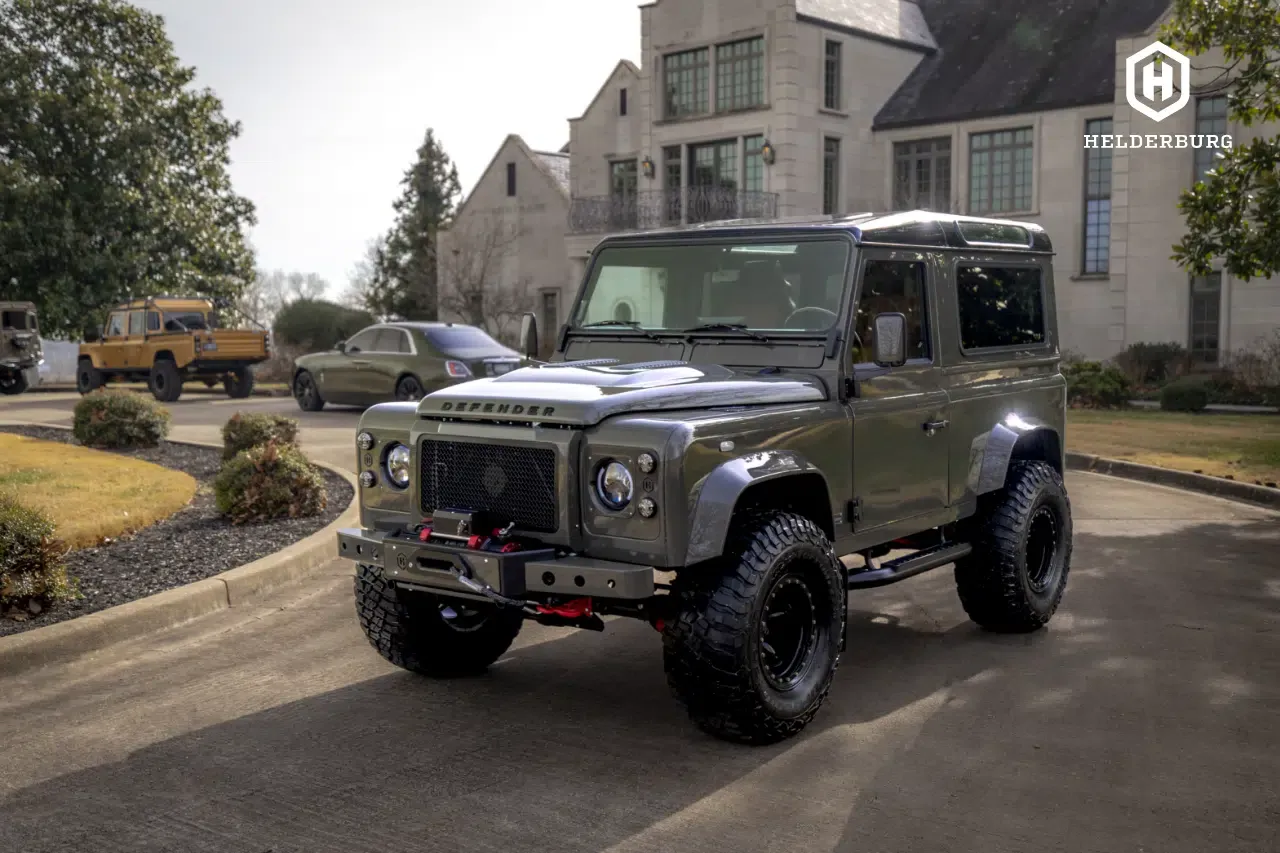
A highly specialized Land Rover Defender D90 known as “Osprey” is emerging as a singular example of engineering tailored for real-world endurance, combining off-road capability with long-distance efficiency and refined design.
Developed as a one-of-one Helderburg commission, Osprey was built through an extensive engineering program focused on integrating its powertrain, chassis and structural systems into a cohesive platform. Rather than relying on conventional aftermarket upgrades, the vehicle was designed from the ground up to perform consistently under demanding conditions.
At the center of the build is Helderburg’s Turbo Diesel SV Edition engine, calibrated to produce roughly 520 lb-ft of torque at low engine speeds around 1,800 rpm. This approach emphasizes immediate power delivery, improved control on difficult terrain and reduced mechanical strain during towing or climbing. The low-rpm torque profile also supports stability in snow and on steep grades, aligning with the vehicle’s intended use in mountainous environments.
Osprey was engineered with three primary purposes in mind: accessing remote mountain locations, maintaining reliability in winter conditions and achieving long-distance travel efficiency. The diesel powertrain is tuned to deliver approximately 28 miles per gallon, significantly extending range compared to traditional gasoline V8 conversions. Despite its focus on efficiency and low-end power, the vehicle is capable of sustained highway travel at speeds near 85 mph.
Supporting the powertrain is a suite of custom hardware, including Helderburg’s Exclusive Suspension and Aegis Braking System. The widened stance and tailored suspension geometry enhance stability on uneven surfaces and winding roads, while the braking system is designed for consistent performance during extended descents and under heavy loads.
The vehicle underwent a 30-day validation program in Arkansas’ Ozark Mountains, where it was tested across rock climbs, loose terrain, simulated winter conditions and long highway stretches to confirm real-world capability.
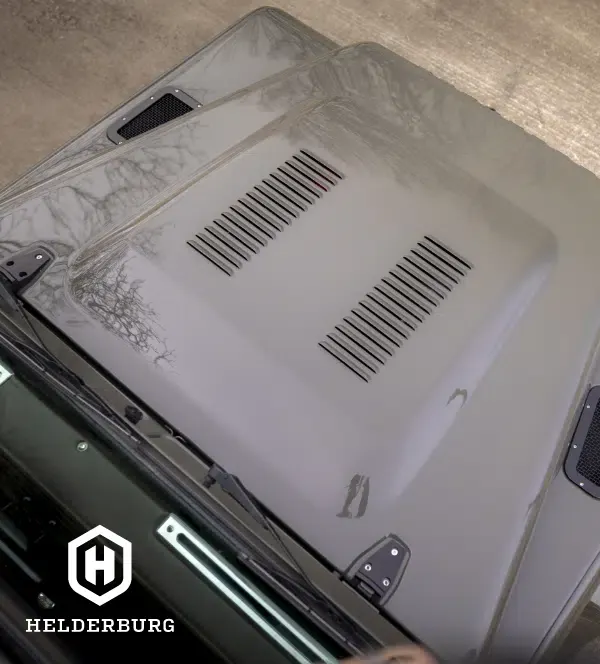
Visually, Osprey maintains a restrained aesthetic. Its hand-formed aluminum body is finished in a custom color unique to this build and permanently retired after completion. Signature design elements are present but intentionally understated, creating a balanced appearance suited for both remote environments and urban settings.
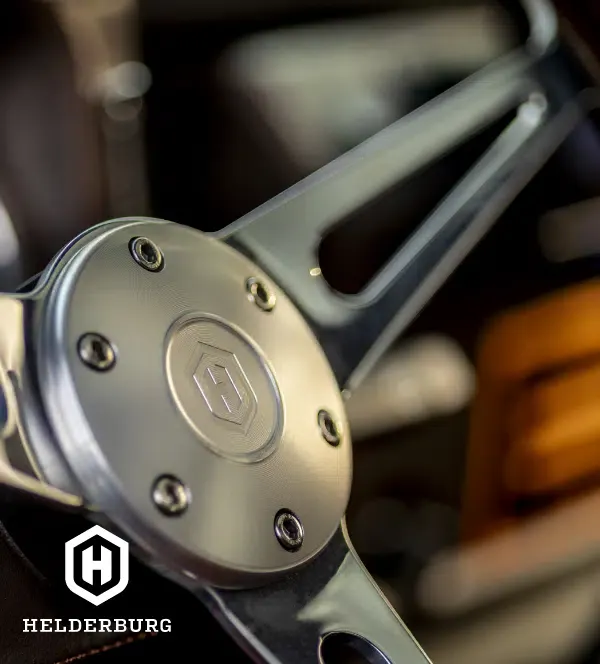
Inside, the cabin reflects a personalized approach, with custom-tanned leather, tailored seating and materials selected for durability and comfort. The interior layout accommodates both daily use and long journeys, while analog-style controls and a premium audio system emphasize a tactile driving experience.
As a completed commission, Osprey stands apart from production models, representing a singular interpretation of the Defender platform built for one owner and a specific purpose.