
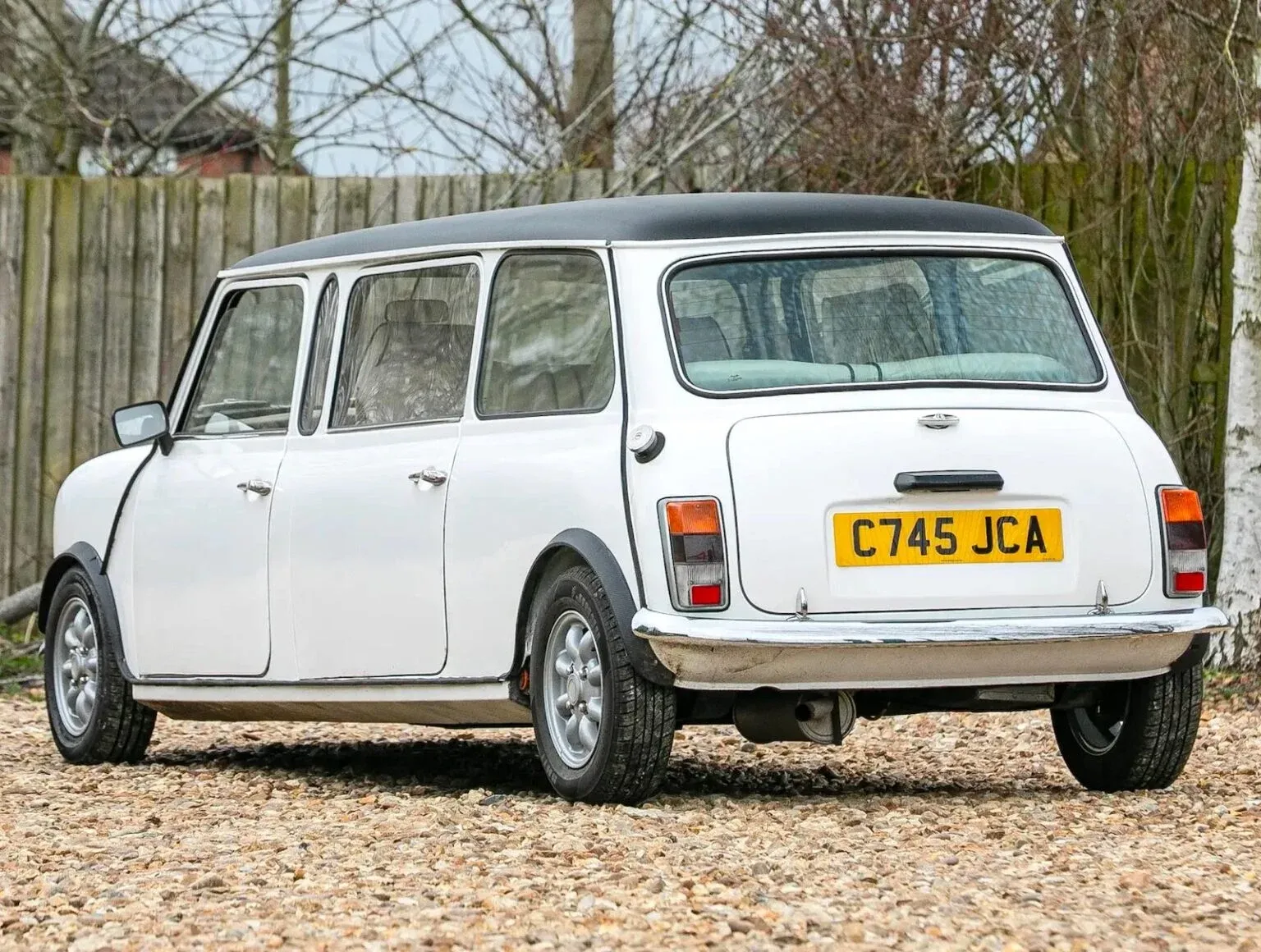
A highly unusual take on one of Britain’s most iconic small cars is set to appear at auction, as a 1985 Austin Mini converted into a stretch limousine prepares to cross the block later this month.
Originally produced as a compact economy car, the Mini gained worldwide recognition for its clever engineering and cultural impact. The example now headed to auction represents a dramatically different interpretation of the classic design, having been professionally modified into a limousine capable of carrying up to six passengers.
The car began life as a standard 1985 Austin Mini before undergoing a major transformation in the early 2000s. A specialist garage in North Wales carried out the project, which involved cutting the car in half and lengthening the body to accommodate additional passenger space. The extended chassis was reinforced during the process, creating a longer wheelbase suitable for limousine-style seating.
To make the layout practical, the conversion added a second pair of rear doors and redesigned the cabin to include two sets of rear-facing seats. The finished configuration allows for six occupants inside the small car’s stretched body, turning the compact Mini into a novelty chauffeur-style vehicle.
Inside, the limousine-style interior features white vinyl upholstery throughout the rear seating area, complemented by black carpeting and matching white door cards. Up front, the driver’s area includes a wood-rimmed steering wheel, maintaining a blend of classic Mini design cues with the custom limousine modifications.
Power comes from the 1,275cc version of the Mini’s well-known A-Series engine, the largest factory engine offered in the model during its production years. The engine is paired with a traditional four-speed manual transmission.
The original Mini traces its origins back to the late 1950s, when Britain faced fuel shortages following the Suez Crisis. British Motor Corporation sought a compact and efficient alternative to the small imported microcars that had begun appearing across the country. Engineer Alec Issigonis responded with a revolutionary design that maximized interior space by mounting the engine sideways and integrating the gearbox within the engine’s oil sump.
That layout allowed the car’s mechanical components to occupy a small portion of the vehicle’s footprint while leaving most of the space for passengers. Combined with small wheels pushed to the corners of the body and compact rubber-cone suspension, the design created a nimble and practical vehicle that could carry four adults despite its small size.
Over the following decades, the Mini developed into a wide-ranging lineup that included estate versions, luxury variants, and performance models such as the Cooper and Cooper S. Those performance versions achieved international recognition through rally and touring car racing success, including multiple wins in the Monte Carlo Rally.
Production of the original Mini continued for more than four decades, ultimately exceeding 5.3 million units before the final example left the assembly line in 2000.
While the majority of Minis remained small and practical city cars, unusual custom projects like this stretch limousine highlight the flexibility of the platform and the enthusiasm surrounding the model. The converted Mini is scheduled to be offered by Iconic Auctioneers on March 21 with a price estimate between £8,000 and £10,000, equivalent to roughly $10,685 to $13,357.
Source