
A heavily weathered 1939 Ford 85 Series Tudor sedan has surfaced as a restoration candidate, offering enthusiasts a glimpse into one of Ford’s most recognizable prewar designs.
The two-door sedan, finished in black, is currently presented in barn-find condition after reportedly spending roughly five decades in storage. The car shows 70,009 miles on its odometer, though its actual mileage is unknown due to age and incomplete records.
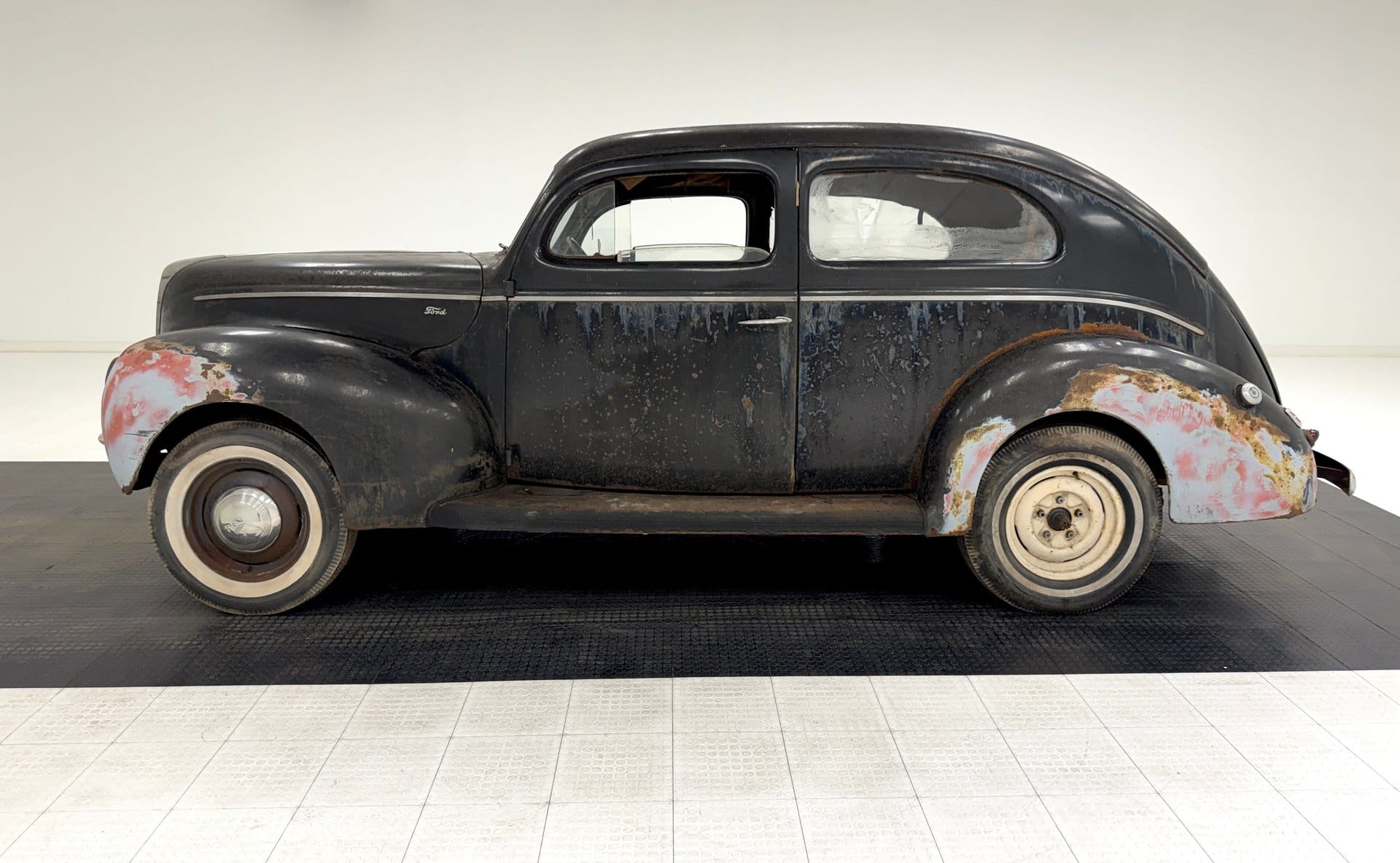
Despite its rough condition, the car retains the distinctive styling that made the 1939 Ford Tudor a memorable design of the late 1930s. The model shares its overall body shape with the Deluxe version and features sweeping lines, forward-leaning proportions and pontoon-style fenders that defined Ford’s design language at the time. The fastback-style roofline flows toward the rear decklid, giving the car a streamlined profile typical of the era just before World War II.
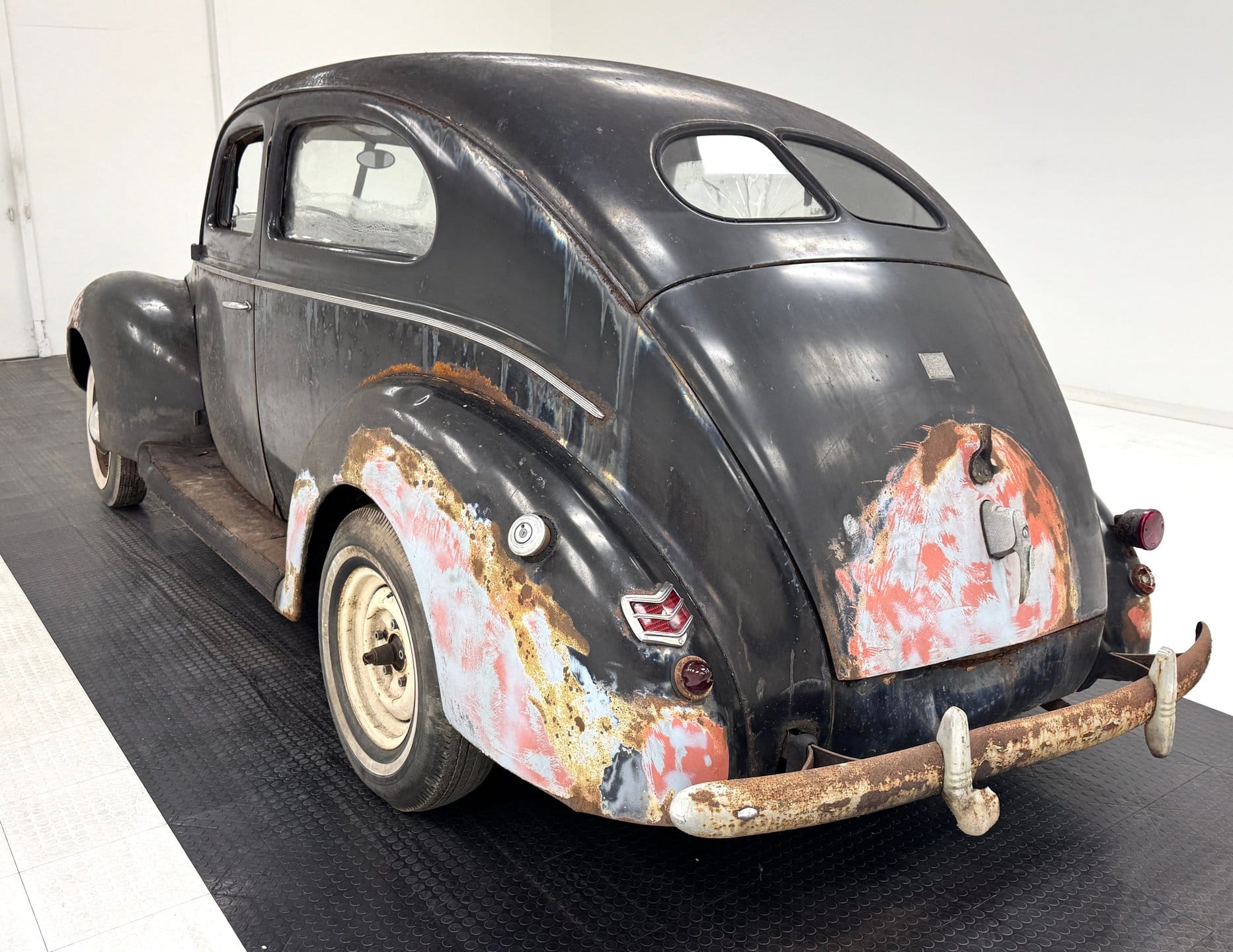
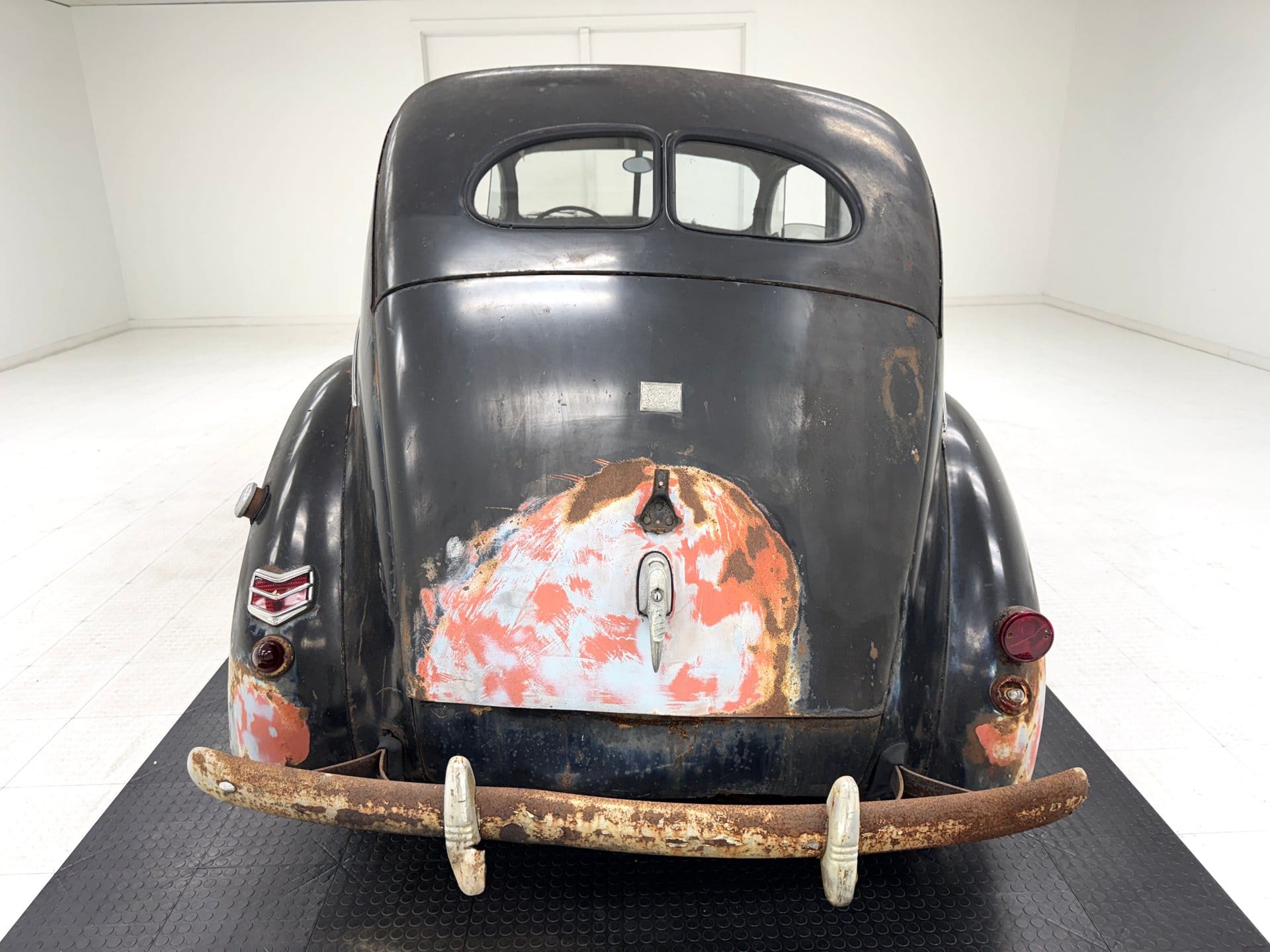
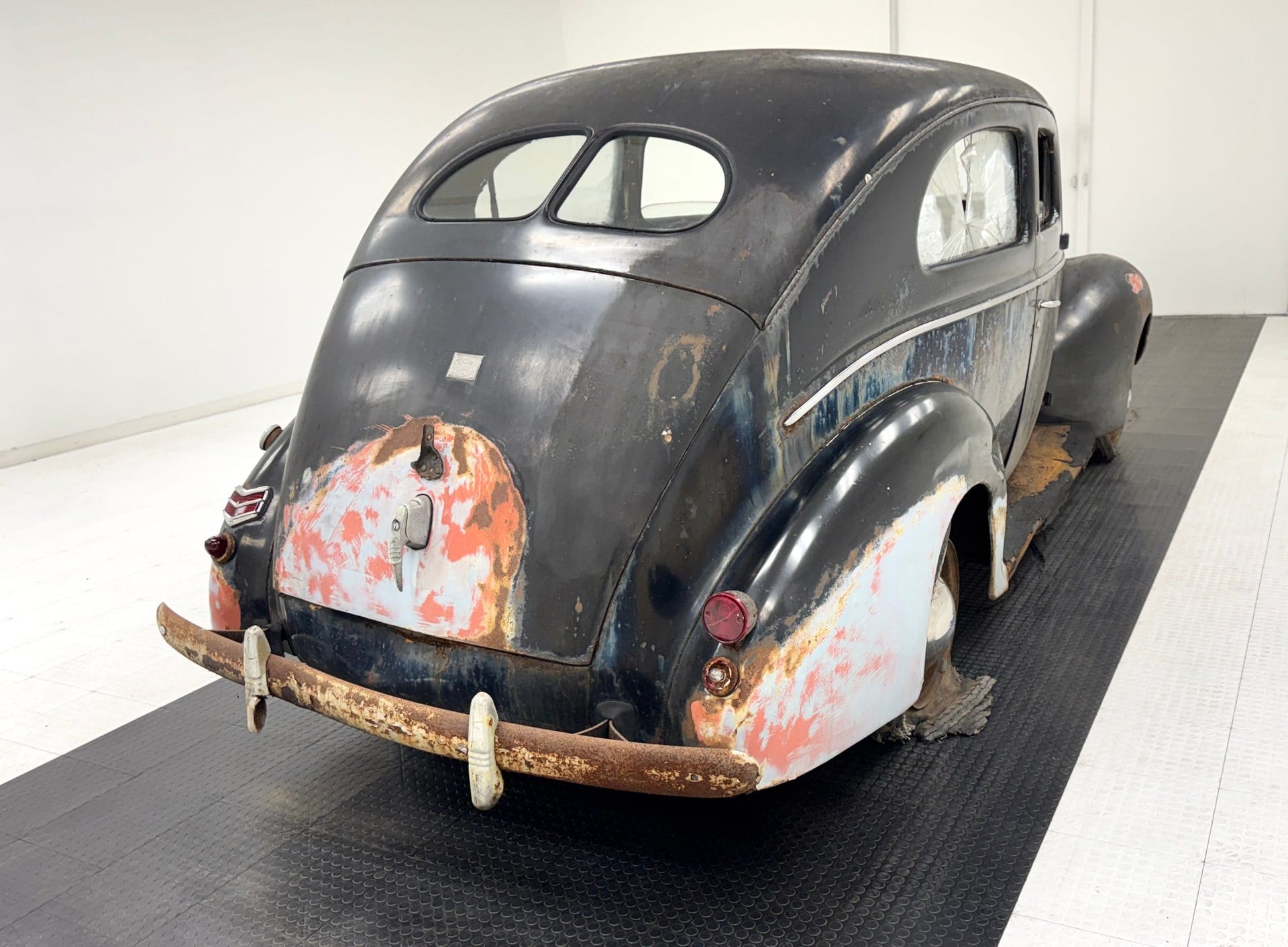
The exterior shows extensive wear consistent with long-term storage. Much of the original black paint remains on the body, though age has left visible patina across the vehicle. Rust, pitted metal, dents and misaligned body panels are present in several areas. The running boards show deterioration where the rubber coating has worn away, while the rear bumper carries heavy surface rust. The front bumper is missing entirely, and the grille shows signs of significant deterioration. The car also has cracked glass, mismatched lighting lenses and one headlight missing from its housing.
Inside, the cabin reflects the same aged condition. The beige mohair door panels are weathered and loose, and the broadcloth seats are torn and broken, exposing internal materials used in automotive seating before foam cushioning became common. The dashboard shows rust and dust accumulation but still features an art deco-inspired instrument cluster typical of late-1930s design.
The black steering wheel has faded and cracked with age, and the floor shows signs of heavy wear. Pedals are missing from the interior, though several loose parts are stored in the trunk.
Mechanically, the car no longer has an engine installed. However, a three-speed manual transmission remains in place and is still connected to the driveshaft and rear axle with 3.78 gearing. The chassis is equipped with drum brakes at all four corners and uses transverse leaf springs for the front and rear suspension.
The undercarriage shows advanced surface rust and grime but appears largely intact. Portions of the exhaust system, including a stock-style muffler, remain present.
Although the vehicle requires extensive restoration work, it offers a potential starting point for collectors or street rod builders seeking a classic prewar Ford project. With its iconic Tudor sedan body style and original mechanical components still partially intact, the car represents a piece of automotive history awaiting its next chapter. See it here.