
A meticulously restored 1959 Chevrolet Impala Convertible is being offered for $279,995, highlighting one of the most recognizable designs of the late 1950s and a model that helped redefine Chevrolet’s place in American automotive history.
Introduced to dealers in October 1958, the 1959 model year marked a turning point. For the first time, the Impala became a standalone model, replacing the Bel Air as Chevrolet’s top passenger car. The redesign departed dramatically from earlier styling themes, ushering in a bold, space-age look that has since become emblematic of the era.
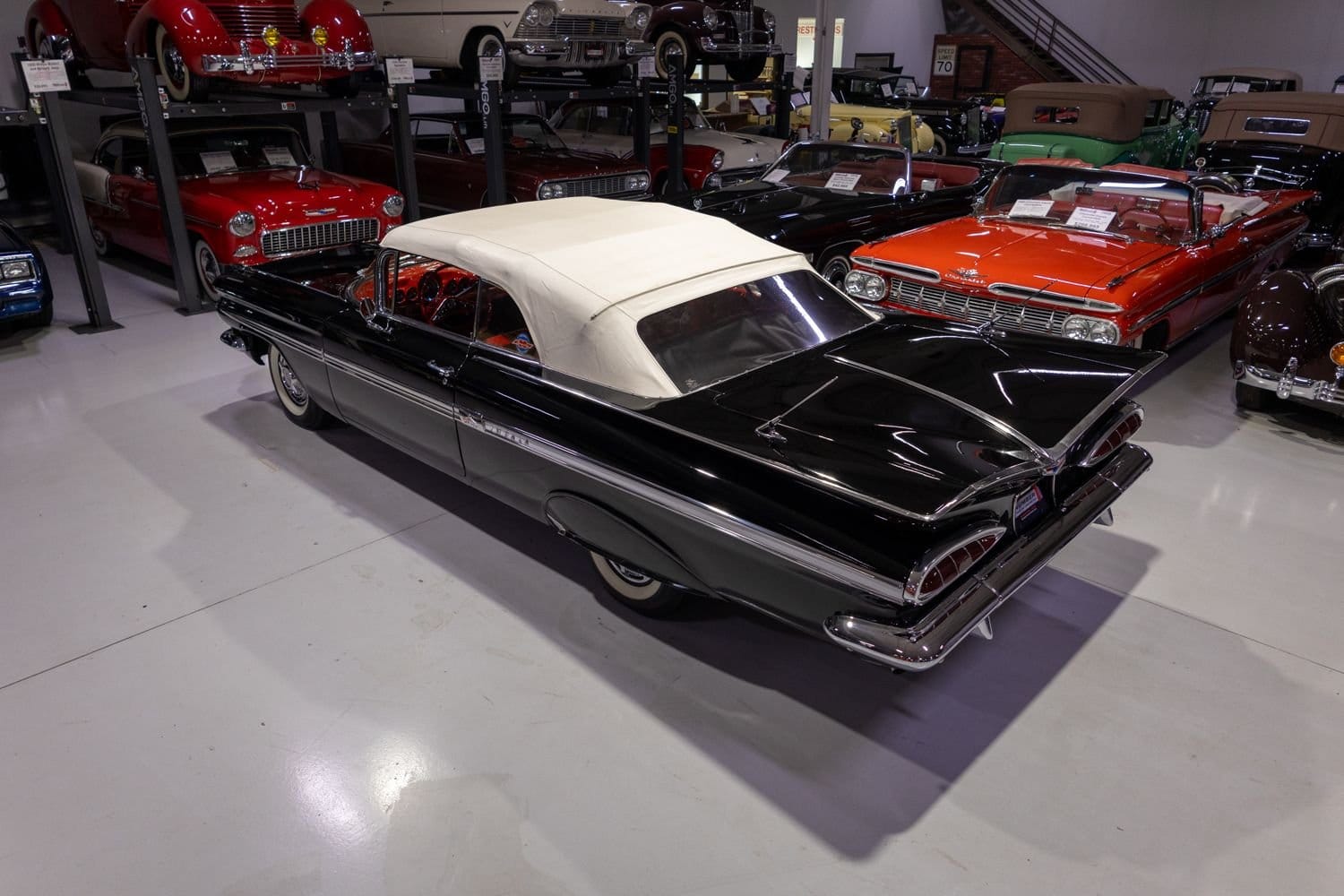
From the front, the car features a wide, low hood accented by jet-inspired details above a horizontal grille segmented by vertical bars. Along the sides, distinctive Impala-exclusive trim separates it from lesser models. At the rear, dramatic gull-wing fins frame the one-year-only “Cat Eye” taillights, a design that has become synonymous with 1959 Chevrolet styling.
This particular example comes from a long-term collector and has been refinished in Tuxedo Black. It rides on wide whitewall tires with full spinner wheel covers, and removable color-matched fender skirts enhance its period-correct flair. A white vinyl power convertible top raises and lowers at the touch of a switch and stows beneath a black boot when down.
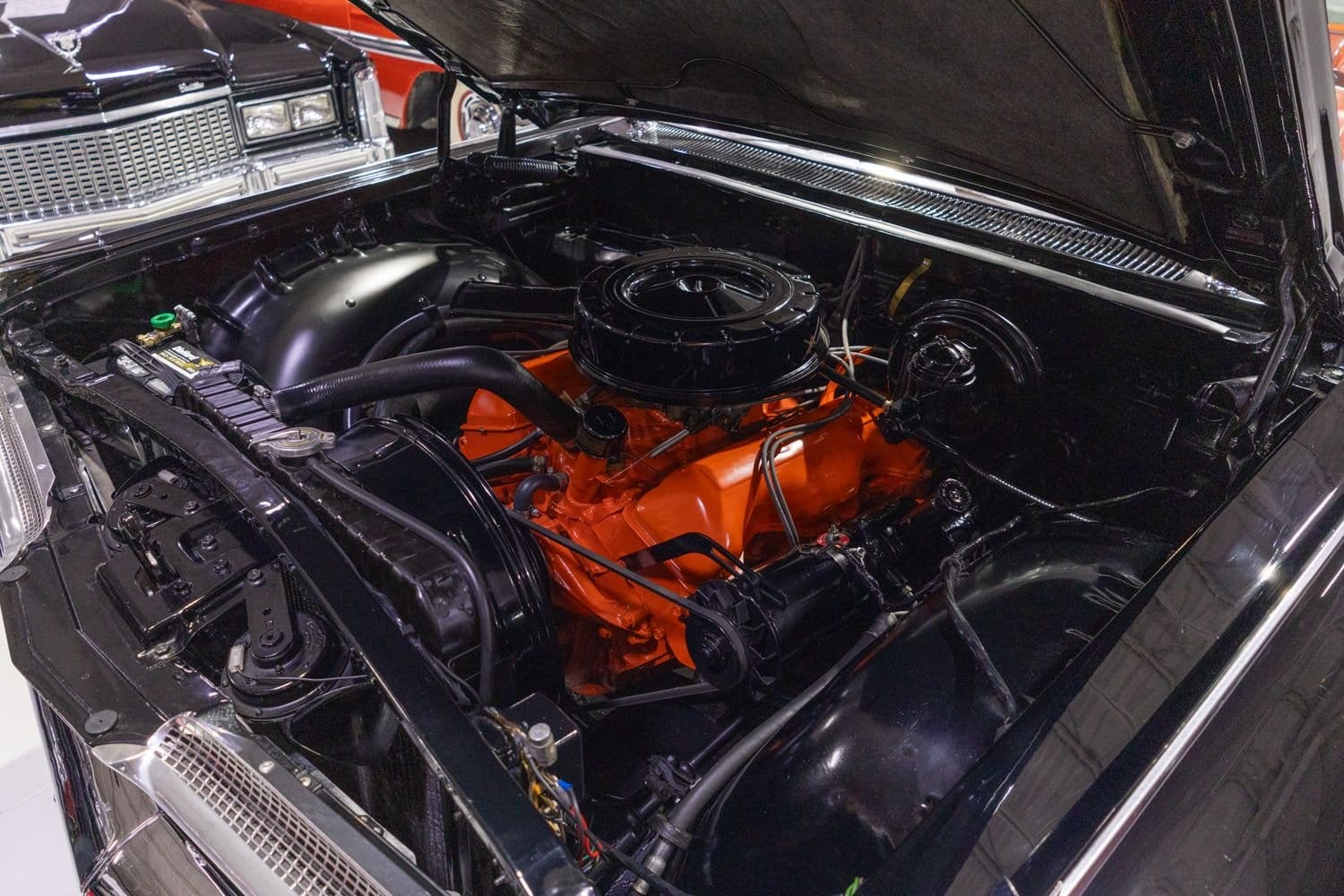
Under the hood sits a 348-cubic-inch Turbo-Thrust V8 equipped with a single four-barrel carburetor, originally rated at 250 horsepower. The engine is paired with a Powerglide automatic transmission and dual exhaust. Power steering and power brakes aid drivability for the more than 3,600-pound convertible.
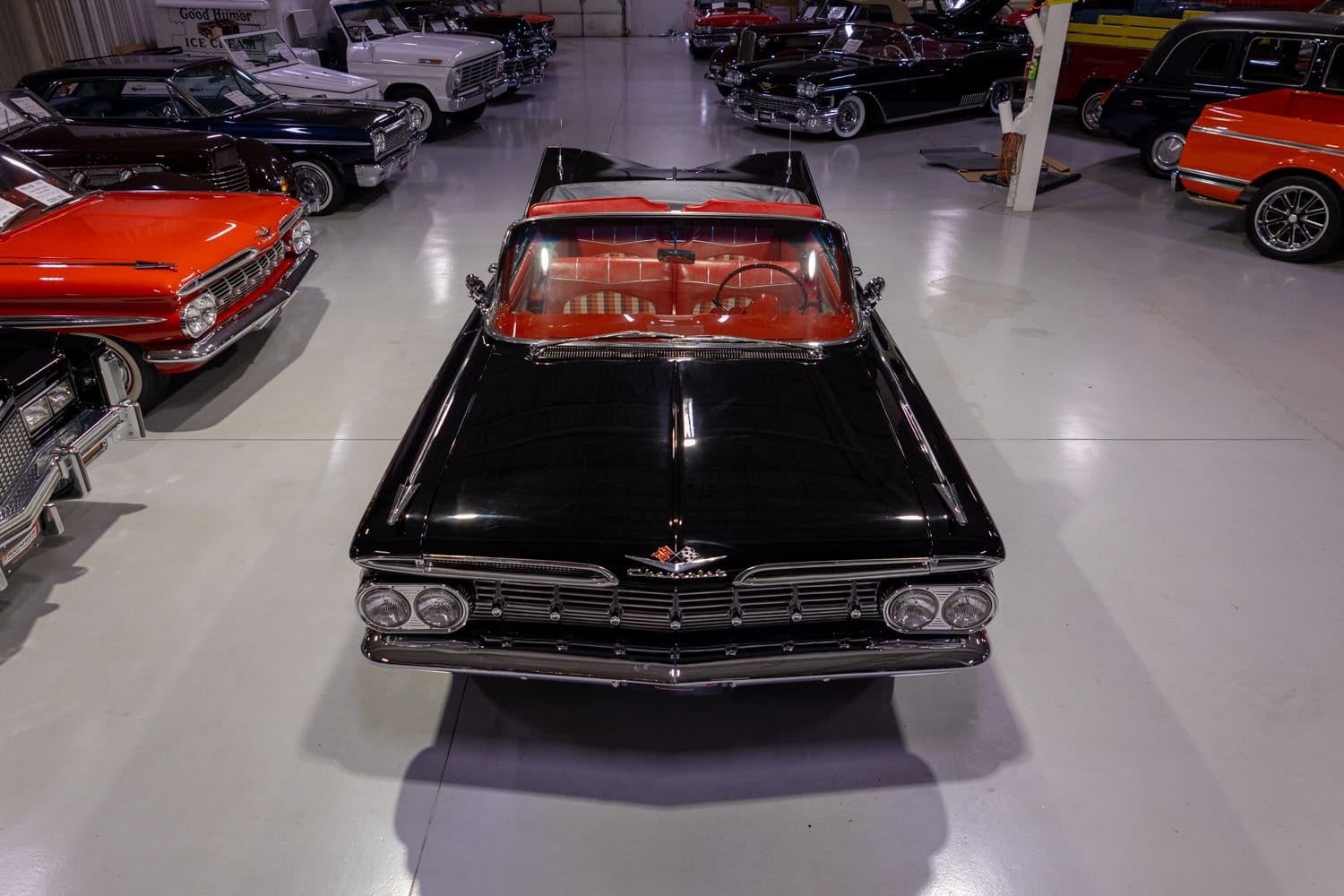
Inside, red vinyl bench seating with tri-color cloth inserts complements a Roman Red dashboard and matching trim. Stock instrumentation includes a 120-mph speedometer, temperature and fuel gauges, warning indicators and a clock. A push-button AM radio adds to the authentic driving experience.
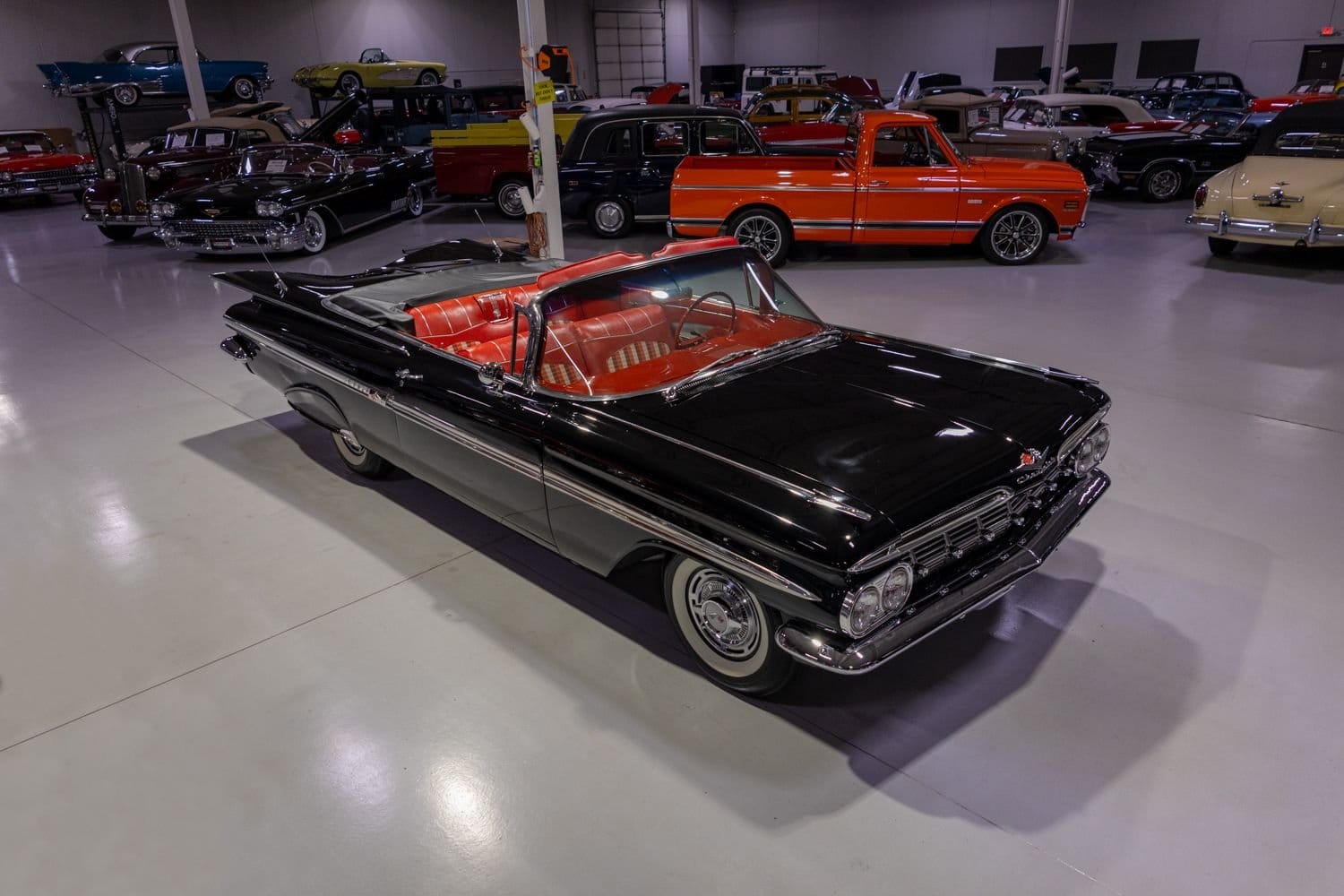
With just 3,006 miles showing on the odometer, this 1959 Impala Convertible stands as a vivid representation of Chevrolet’s design ambition at the height of the American automotive golden age.